
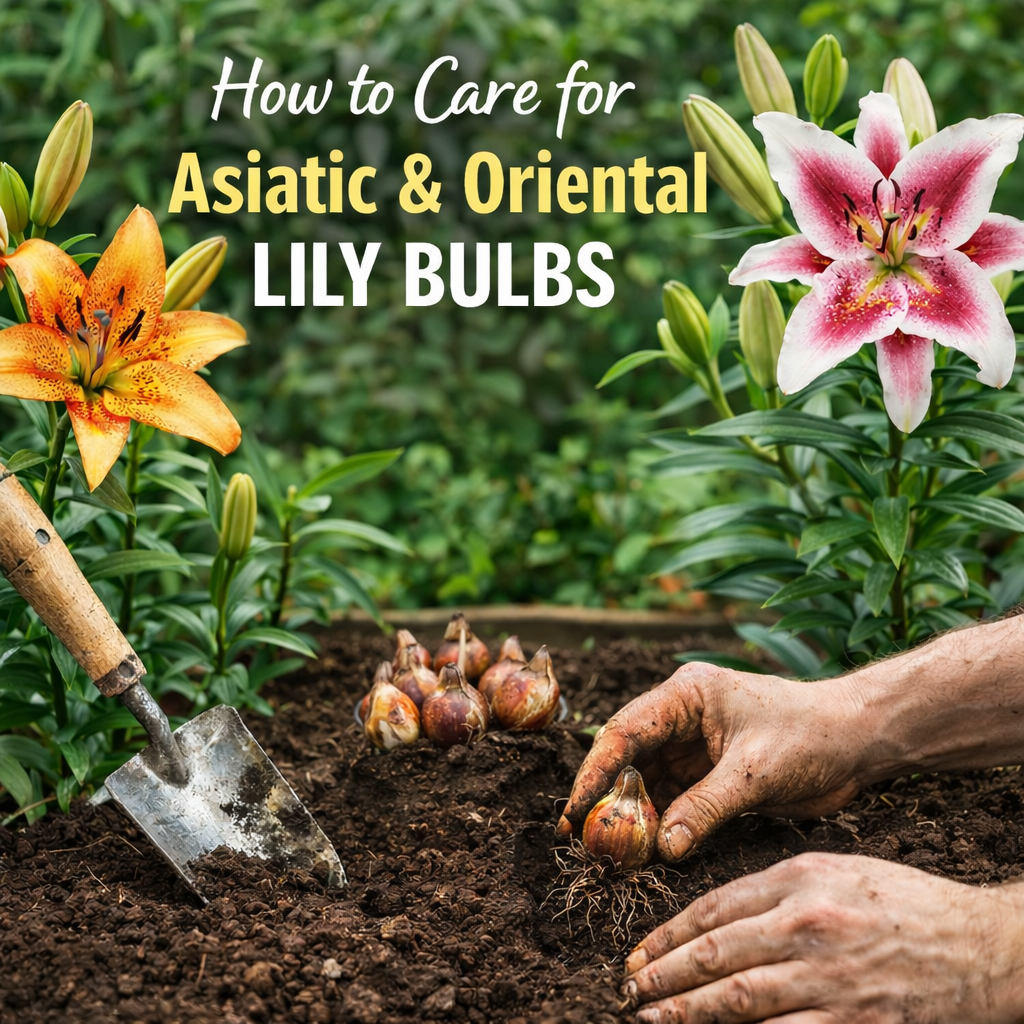
How to Care for Asiatic & Oriental Lily Bulbs in India
Asiatic and Oriental lilies are among the most rewarding flowering bulbs you can grow in Indian gardens. With the right soil, watering, fertilizers, and seasonal care, these bulbs can return year after year with spectacular blooms. This guide focuses specifically on caring for Asiatic and Oriental lily bulbs in Indian conditions, whether you grow them in pots or in the ground.
If you are still deciding which type to grow, you can first read our detailed comparison on the difference between Asiatic and Oriental lily flowers.
🌱 Choosing and Storing Lily Bulbs
Healthy bulbs are the foundation of strong plants and abundant flowers. When selecting bulbs, look for firm, plump bulbs with no signs of mould, deep cuts, or foul smell. Slightly loose outer scales are normal, but the bulb should not feel soft or squishy.
- Size matters: Larger bulbs generally produce more stems and flowers in the first season.
- No rot: Avoid bulbs with black, mushy, or water-soaked spots.
- Freshness: Plant bulbs soon after purchase for best results.
If you cannot plant immediately, keep the bulbs in a cool, dry, and airy place away from direct sunlight. In warmer regions, you may store them in the refrigerator’s vegetable compartment (never in a freezer), wrapped in paper or breathable bags to avoid condensation.
📅 Best Planting Season in India
Both Asiatic and Oriental lilies prefer cool to mild temperatures at planting time so that roots can establish before strong heat sets in.
- Plains (most of India): Plant from October to January.
- Hills and cooler regions: Plant from February to April.
Asiatic lilies generally sprout faster and tolerate slightly warmer conditions, while Oriental lilies prefer the cooler end of this window and may take longer to emerge.
🌾 Soil Preparation and Potting Mix
Lilies dislike waterlogged soil. Good drainage is more important than perfect fertility. In heavy or clay soils, always improve drainage before planting.
Soil for Ground Planting
- Drainage: Loosen the soil at least 25–30 cm deep and mix in coarse sand and compost.
- Fertility: Add well-decomposed manure or vermicompost.
- pH: Slightly acidic to neutral soil is preferred.
Potting Mix for Containers
For pots or planters, a balanced, free-draining mix works best. You can explore our growing media collection for suitable blends.
- 40% garden soil
- 30% compost or vermicompost
- 30% coarse sand or perlite
Ensure the container has large drainage holes, and avoid trays that keep excess water under the pot.
🪴 Planting Depth and Spacing
- Depth: Plant bulbs at a depth of about 3 times their height.
- Spacing: Keep 20–30 cm between bulbs in beds.
- Pots: You may plant 3–5 bulbs in a medium to large pot.
🌤 Light and Temperature Requirements
- Asiatic lilies: Full sun to light partial shade.
- Oriental lilies: Bright partial shade, especially in hot plains.
💧 Watering Schedule for Lilies
- After planting: Water thoroughly once.
- Sprouting stage: Keep soil slightly moist.
- Bud formation: Maintain regular moisture.
- Post-bloom: Reduce watering gradually.
🌿 Fertilizer Guide for Asiatic & Oriental Lilies
Balanced feeding supports strong stems, healthy foliage, and abundant flowers. You can explore our organic fertilizer collection for suitable options.
When to Fertilize
- At planting: Mix compost into the soil.
- Early growth: Start light feeding.
- Bud formation: Feed again for stronger blooms.
- Post-bloom: One mild feed helps bulbs recharge.
What Type of Fertilizer to Use
- Organic options: Vermicompost, seaweed extract, compost tea.
- Balanced NPK: Suitable during early growth.
- Higher potassium: Supports strong stems and flowers.
✂️ Deadheading and Foliage Care
- Remove spent blooms but keep green foliage intact.
- Allow leaves to yellow naturally before cutting back.
🪲 Common Pests and Their Management
For safe and effective plant protection, you may explore our bio‑pesticide range.
- Aphids: Curling leaves, sticky residue.
- Thrips: Silvery streaks on leaves and petals.
- Caterpillars: Chewed leaves and buds.
🍄 Fungal Diseases and Rot
- Botrytis: Brown or grey spots on leaves.
- Bulb rot: Mushy, foul-smelling bulbs.
🌦 Seasonal Care
Summer
- Provide afternoon shade in hot regions.
Monsoon
- Ensure pots drain freely; avoid waterlogging.
Winter
- Ideal growing season in many Indian regions.
🧺 Lifting and Replanting Bulbs
- Lift and divide every 2–3 years.
- Store bulbs in cool, dry conditions.
🪴 Pots, Planters & Grow Bags
Lilies grow beautifully in containers. You can also use grow bags for better drainage and portability.
🌺 Enjoying Lilies in Pots and Gardens
Asiatic lilies offer bright colours and easy growth, while Oriental lilies reward you with large, fragrant blooms. With proper soil, drainage, feeding, and seasonal care, you can enjoy healthy plants that return reliably year after year.
Explore the full range of flowering bulbs and lily bulbs available at myBageecha.


