
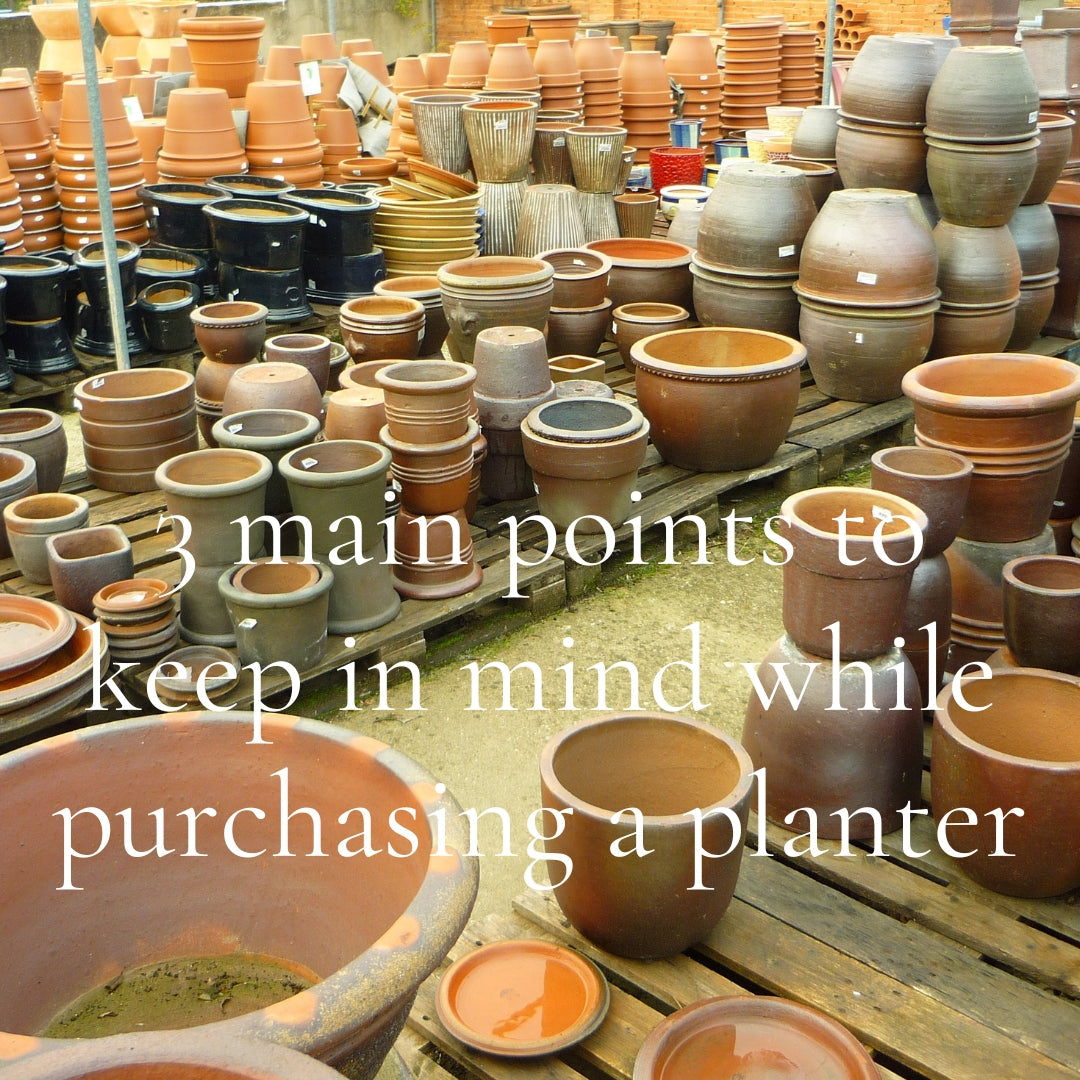
Planter Buying Guide: Size, Drainage, Material, Plant Type & Location
Planters are more than just containers — they directly influence plant health, growth, and the look of your home or garden. Choosing the right planter involves balancing practical needs with aesthetics. Factors like size, drainage, material, plant type, and location all play a role in making the best choice.
Size of the Planter

The size of the planter determines how much room roots have to grow. A larger planter supports healthier root systems and reduces the frequency of repotting. Sellers often use a scale — for example, a “4-inch plant” refers to a planter 4 inches tall and wide. For balcony or patio gardening, flexible options like grow bags are practical and space‑efficient.
Drainage System of the Planter

Proper drainage prevents waterlogging, which can suffocate roots and cause rot. Always choose planters with drainage holes or create them yourself. Adding lava rocks or gravel at the bottom improves water flow. Hanging pots are especially effective for plants that need airflow and quick drainage.
Porous Nature of the Material

Material affects both plant health and aesthetics. Porous materials like terracotta and ceramic allow air circulation, preventing root rot. Terracotta is breathable and rustic, while ceramic offers durability and design variety. Resin and plastic planters are lightweight and versatile, though resin may fade in direct sunlight over time.
Choosing Planters Based on Plant Type
Different plants thrive in different planter types:
- Vegetables: Grow bags are ideal for vegetables like tomatoes, peppers, and leafy greens. They are lightweight, flexible, and provide excellent drainage.
- Climbers & Hanging Plants: Hanging pots suit trailing plants such as ivy or money plant, saving space while adding vertical greenery.
- Succulents & Herbs: Small ceramic pots are perfect for succulents and herbs, offering durability and aesthetic appeal indoors.
- Large Ornamentals: Terracotta pots are excellent for palms or ficus, as they are sturdy, breathable, and support healthy root growth.
Choosing Planters Based on Location
Where you place your planter also influences the best choice of material:
- Balcony or Terrace: Lightweight options such as grow bags reduce load on elevated spaces and are easy to move. They are especially useful for urban gardening where space is limited.
- Ground Level Gardens: Sturdy terracotta pots and resin planters are excellent for larger plants, offering durability and stability.
- Direct Sunlight: Resin planters should be placed in indirect light, as strong sun exposure may cause colors to fade. Terracotta withstands sunlight well but requires regular watering due to its porous nature.
- Indoor Spaces: Ceramic planters are ideal indoors, as they retain moisture better and come in decorative designs that complement interiors.
Conclusion
Choosing the right planter involves considering size, drainage, material, plant type, and location. With these essentials in mind, plants thrive while enhancing your home décor. For a wide variety of options, explore the Pots & Planters collection.


2 comments
Malvika Gupta
Thanks for sharing the best main points for plastic plant trays. These are very much informative and helpful.
Akanskha pandey
Very Informative