

Balcony
Use

Maroon
Flower Color

Non Fragrant
Fragrance

Summer
Flowering Season

Low
Maintenance

Outdoor Sun
Sunlight Requirement

Yes
With Pots

Small
Size

Twice A Week
Water Requirement
Persian Carpet Flower
Family
Asclepaidaceae
Native
Rwanda, Kenya and Tanzania
Description
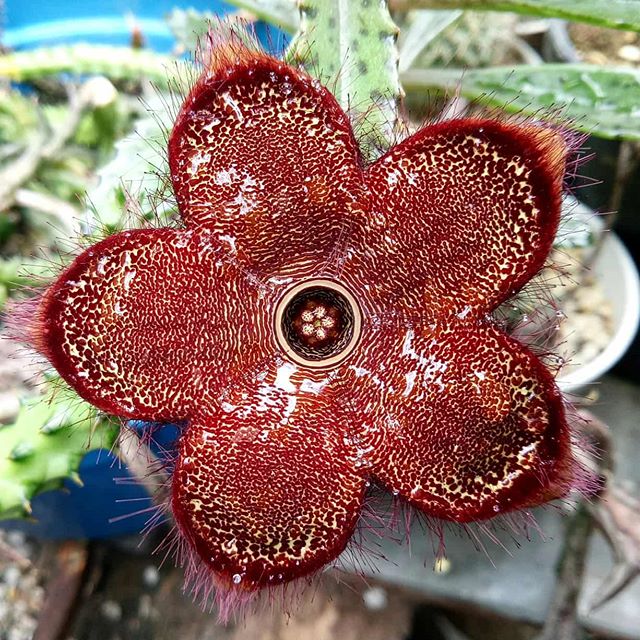
Edithcolea grandis is a one of the handsomest and most distinct of all the Stapelioid group. The remarkable flower is at times described as the Persian carpet flower. It is a leafless richly branched perennial succulent that spread over the ground forming large cushions. Glabrous 4-5-angled, decumbent at the base 10-15 mm thick in diameter and growing to about 30 cm in length, glabrous maroon with yellow spots, angles armed with hard brown very acute spine-like teeth. Subsolitary, formed near the tip of the branches; pedicels 14-18 mm long, 2-2,5 mm thick, glabrous.
Environment
Edithcolea plants prefer early morning or late afternoon sun. They will require much water and soaking the pots. They will tolerate very hot weather outdoors as long as they are kept in filtered light and this will encourage them to flower in the Autumn. They also enjoy some fertilizer.
Sad edithcolea will start to turn a dark purple/burgundy color slowly. Then, they will start to shrink like a raisin. The color change is the first and most important clue. Too much light, or not enough water will cause this. The last and usually fatal clue is when they abandon their roots. They are not "rotting" off...the plant is actually aborting the roots by choice, getting rid of unnecessary body parts that cost it energy during stress. Either reduce light or water more when you see this stress color change!
As soon as they are flowered be sure to take extra precautions to keep them dry, because damp cool conditions when the plants are resting is an invitation to fungal infections
Since roots are quite shallow, use a cactus mix or add extra perlite or pumice to regular soil potting soil. A gritty, very free-draining compost is suitable, and clay pots help the plants to dry out between watering. Re-pot every 1 year.
Landscape Uses
Makes an attractive landscape plant and grasslands or pampas, on plains and walls It is an excellent plant for container growing. It always looks good and stays small.