
Caring for Aechmea is not difficult, they only require the center vase to be watered and not the soil. In fact, in their natural habitat they do not need soil and will grow on trees. The roots are very small on this plant compared to most house plants and do not take water and nutrients from the root system.
Aechmea are very adaptable to a wide range of light. They will thrive in shaded areas as well as areas with bright indirect sunlight. Aechmea are more tolerant of dense shade than other common bromeliads. The more sunlight a Aechmea receives, the more humidity it will need to avoid scorching the leaves. Aechmea foliage will also become more brilliant in color when exposed to more light. Moderate temperatures are preferred by Aechmea.
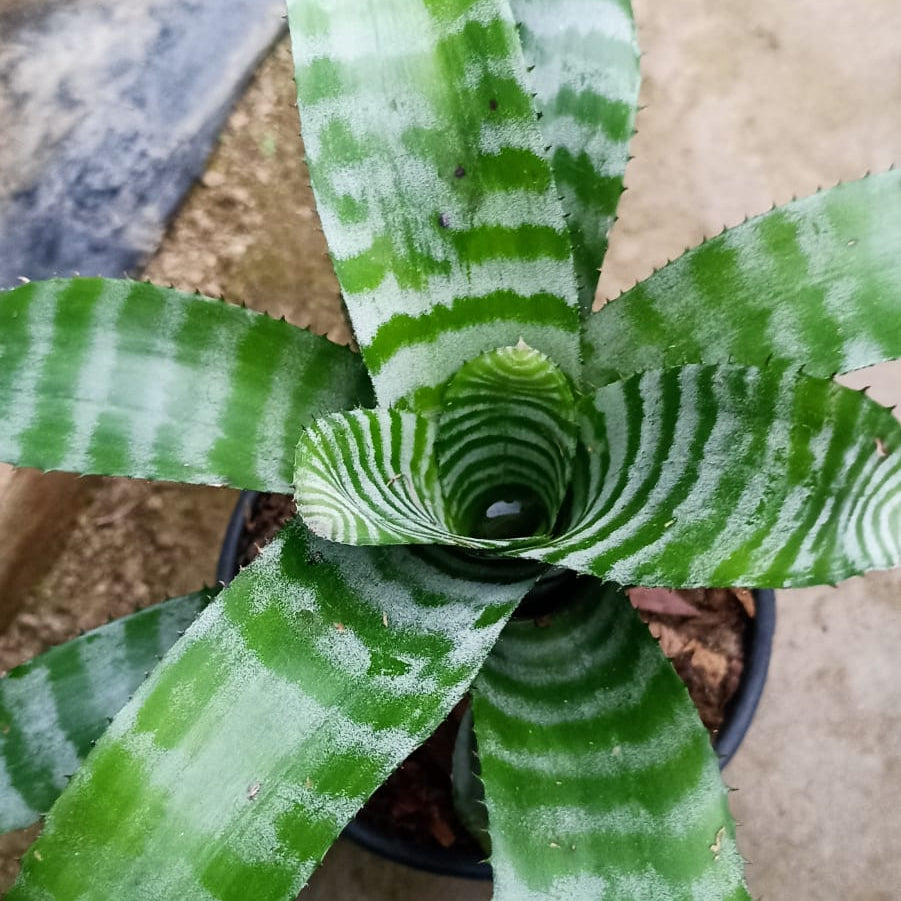
Like many bromeliads, Aechmea are primarily epiphytic so they take in water and nutrients through the central tank. They are easily susceptible to crown rot. If the potting medium they are planted in remains soggy or moist, the roots will rot and ultimately destroy the plant. It is important to make sure the tank of the Aechmea remains wet, but not the potting medium. It is also necessary to flush the tank with fresh water weekly. This will prevent build up on the leaves and will also prevent insect development and stagnation. Using rainwater or distilled water to fill the tank will prevent a saline build up on the leaves. One can also provide humidity by misting the entire plant with a spray bottle.
Aechmea can be fertilized using a slightly acidic fertilizer diluted to a quarter of the recommended strength. During the growing season, thoroughly coat the all surfaces of the foliage with the diluted solution at least twice a month.


Aechmea
Genus

Orange
Flower Color

Non Fragrant
Fragrance

Winter
Flowering Season

Low
Maintenance

Medium
Size

Pink
Color

Yes
With Pots

Indoor Filtered Light,Outdoor Shade
Sunlight Requirement

Balcony,Low Maintenance
Use
Amazonian Zebra
Family
Bromeliaceae
Origin
Brazil
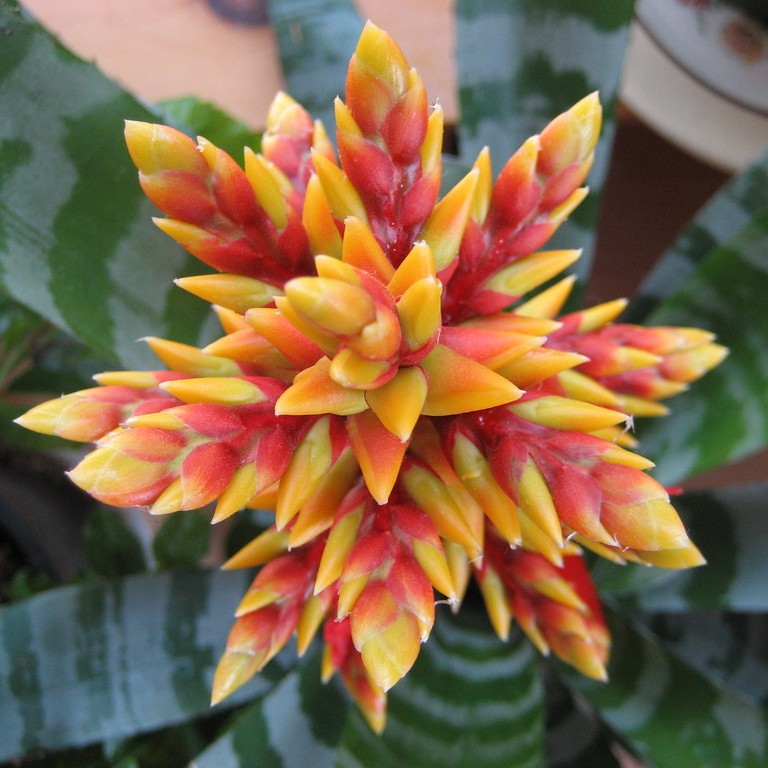
A beloved ornamental plant, Aechmea chantinii, also known as the Amazonian Zebra Plant, boasts vibrant foliage and exotic inflorescence. Its long, stiff, and spiny-edged leaves form a striking rosette, with green coloration and distinctive white or silver zebra-like banding. During summer, it produces impressive orange to red bracts, topped with yellow or orange flowers that can last for weeks. This bromeliad, native to the Amazon rainforest, is a must-have for any plant enthusiast.
Environment
Caring for Aechmea requires watering the central vase instead of the soil. This plant typically grows on trees in its natural habitat and has small roots that do not absorb water and nutrients from the soil.
Aechmea is highly adaptable to a wide range of light conditions, thriving in both shaded and well-lit areas. To avoid leaf scorching, it is important to provide more humidity as the plant receives more sunlight. Aechmea prefers moderate temperatures and obtains water and nutrients through its central cup.
To prevent crown rot, it is important to keep the cup wet while ensuring the potting medium remains dry. Flushing the cup with fresh water weekly prevents build-up on the leaves and discourages insect development. Using rainwater or distilled water to fill the tank prevents a build-up of salts on the leaves. For added humidity, misting the entire plant is recommended. A quarter of the recommended strength of slightly acidic fertilizer can be used to fertilize Aechmea during growing season.
Landscape Uses
Excellent for indoor decoration, patios, and tropical-themed gardens


