


Daily
Water Requirement

Lavender
Flower Color

Fragrant
Fragrance

Winter & Spring
Flowering Season

Low
Maintenance

Outdoor
Use

Small
Size

Outdoor Shade,Outdoor Sun
Sunlight Requirement
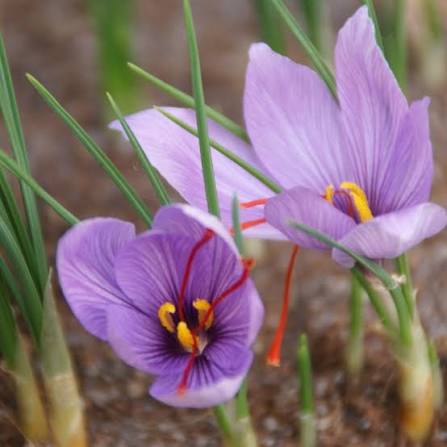
Delicate Lilac Flowers with Precious Red Saffron Stigmas
Crocus sativus, commonly known as the Saffron Crocus or Kesar, is an attractive autumn-flowering plant belonging to the Iridaceae family. It is cultivated for its beautiful lilac-purple flowers and the distinctive red stigmas that are harvested and dried to produce saffron. Native to the Mediterranean region, the plant is also commercially cultivated in suitable parts of India, particularly cooler regions such as Kashmir.
The plant grows from underground corms and develops narrow, grass-like green leaves around the flowering period. Each flower has six lilac to violet-purple segments, three yellow stamens and three prominent red-orange, three-branched stigmas. The compact plants generally reach around 10–20 cm in height, making them suitable for garden beds, raised beds and containers with excellent drainage.
Flower Colour & Blooming
The flowers are typically lilac to violet-purple, with contrasting red-orange stigmas and yellow stamens. Flowering generally occurs during autumn, particularly around October to November under suitable growing conditions. The red stigmas are carefully collected and dried to produce saffron.
Environment
Sunlight: Grow in a sunny location with good exposure to light. Adequate sunlight supports healthy growth and flowering, while a suitable seasonal temperature cycle is important for successful cultivation.
Watering: Provide moderate moisture during active growth and flowering, while allowing excess water to drain freely. Avoid excessive watering and prolonged wet conditions, which can lead to corm rot.
Soil: Prefers loose, fertile and well-drained soil with good drainage. Sandy or sandy-loam soil is suitable, while heavy or waterlogged soil should be avoided.
Fertilizer: Incorporate well-decomposed organic matter or compost into the growing medium before planting. Feed moderately during active growth and avoid excessive fertilization.
Planting Crocus sativus Corms
Plant the corms during the appropriate pre-flowering period, generally around July to September depending on the local climate. Place the pointed growing end upwards in loose, well-drained soil. Healthy, mature corms are more likely to produce flowers in the first season.
Landscape Uses
- Ideal for seasonal flower beds and raised planting areas in suitable climates.
- Suitable for containers with excellent drainage.
- Can be planted in groups to create an attractive autumn display of lilac-purple flowers.
- Suitable for kitchen gardens and specialist spice gardens in appropriate climates.
- Grown primarily for its valuable red stigmas, which are harvested and dried as saffron.
Growing Note
Crocus sativus performs best where the climate provides suitable seasonal conditions, including a relatively warm growing period followed by cooler conditions during flowering. In India, successful saffron cultivation is particularly associated with cooler regions such as Kashmir. Flowering performance can vary according to climate, corm size, planting conditions and growing practices.


