
The easiest to keep alive - Cactus thrive on neglect! Coming from desert cCotyledon pendens Succulent Plant
limates cactus love sun! However beware of the Indian afternoon sun! Keeping them in extreme heat, especially behind a glass which magnifies the heat can cause the cactus to burn. If you notice the cactus turning brown or yellow on the side facing the sun, try giving it a cooler place to thrive in!
For watering cacti, the golden rule is to make sure the soil is completely dry before watering! This will stop the roots from rotting. It is advised to always use a pot with a drainage hole so that excess water can get drained out. If kept in a sunny area, you will need to water it once every week. If it is in a semi shaded or filtered light area, you might need to water it once in 2 weeks.
Cacti like soil that is well aerated and fast draining. You can fertilise the cactus in the summer months when it is in its growing season. During the winters it is best to cut back on any fertiliser and let the plant rest.
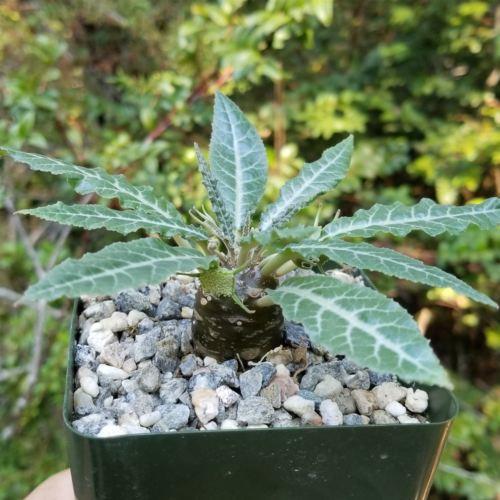


Dorstenia
Genus

Green
Flower Color

Non Fragrant
Fragrance

Summer
Flowering Season

Low
Maintenance

Yes
With Pots

Small
Size

Indoor Filtered Light,Outdoor Shade,Outdoor Sun
Sunlight Requirement

Twice A Week
Water Requirement

Low Maintenance,Outdoor
Use
Flying saucer plant
Origin
Northeast Africa
Family
Moraceae
Description
Dorstenia Lancifolia is characterized by its unique, typically elongated lance-shaped leaves, which inspire its species name “lancifolia.” These leaves are arranged either in a rosette formation or sparsely along short stems, exhibiting a subtly glossy surface with a fine texture. Its most notable attribute is the robust, bulbous caudex, frequently dark-hued and textured, which distinguishes this species.
The plant features a robust, conical trunk ranging from dark green to mahogany in color, reaching up to 15 centimeters in diameter and 30 to 40 centimeters in height. Mature sections often display peeling bark. The stem is marked by distinct, prominent round scars from petioles, inflorescences, and stipules arranged in a spiral pattern.
Often referred to as the flying saucer plant, Dorstenia Lancifolia is recognized for its distinctive disk-shaped floral structures known as hypanthodiums. These fruiting bodies resemble flowers but are unique to the species. The plant produces small, subtle flowers that typically remain concealed beneath the foliage.
Environment
Dorstenia needs bright light or partial to full shade, with warm temperatures and a well-drained soil mix that must not remain soggy for too long. During the growing season, the plants appreciate a fair amount of water but allow the soil to dry slightly between watering, making sure that they never dry out completely. They have to be kept in a rather high air humidity. They are fertilized once during the growing season with a balanced fertilizer diluted to ½ the strength recommended on the label. During the winter months they tend to go at least partially dormant and will exhibit some leaf loss. During this period, they should be given very little water.
Landscape
Dorstenia crispa is pretty versatile, having various landscape uses. This plant will look absolutely gorgeous in rock gardens, succulent gardens, desert gardens, and containers. It is also a common indoor ornamental as a bonsai.


