
1.Proper soil preparation is crucial for planting bulbs successfully. Well-draining, loose soil enriched with compost or leaf mold. Ensure excellent drainage; if your soil is clay-heavy, mix in some coco peat.
2.Ensure the bulbs receive 4 to 6 hours of sunlight daily, adjusting the light exposure according to the specific variety—some prefer partial shade while others require full sun.
3.Plant bulbs at a depth two to three times their height (e.g., a 2 cm bulb goes 4–6 cm deep) with spacing depending on size, typically 5–15 cm apart.
4.Water lightly after planting, keep soil moist but not waterlogged during growth, and reduce watering after flowering to let foliage yellow and bulbs enter dormancy. 5.Apply a low-nitrogen, high-potassium fertilizer when shoots emerge and post-bloom.
6.Avoid cutting green leaves immediately after flowering to allow energy storage.
7.Prevent pests and diseases by avoiding overwatering and treating bulbs with neem oil or mild fungicide before planting.
8.Store bulbs off-season by cleaning, drying in shade, and keeping them in breathable containers at 10–20°C with moisture absorbers; avoid sealed plastic and humid conditions.


Daily
Water Requirement

Red
Flower Color

Non Fragrant
Fragrance

Winter & Spring
Flowering Season

Gladiolus
Genus

Medium
Maintenance

No
With Pots

Small
Size
Autumn
Sowing Season

Outdoor Shade,Outdoor Sun
Sunlight Requirement

Balcony,Low Maintenance
Use
Sword Lily
Family
Iridaceae
Origin
Asia, Mediterranean & South Africa
Description
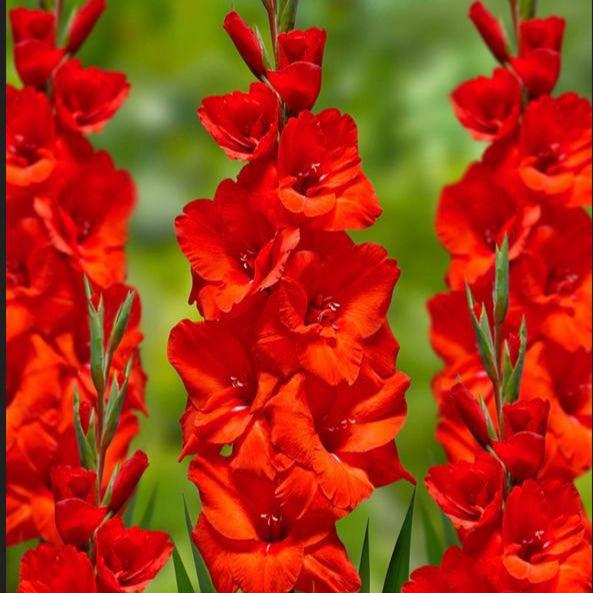
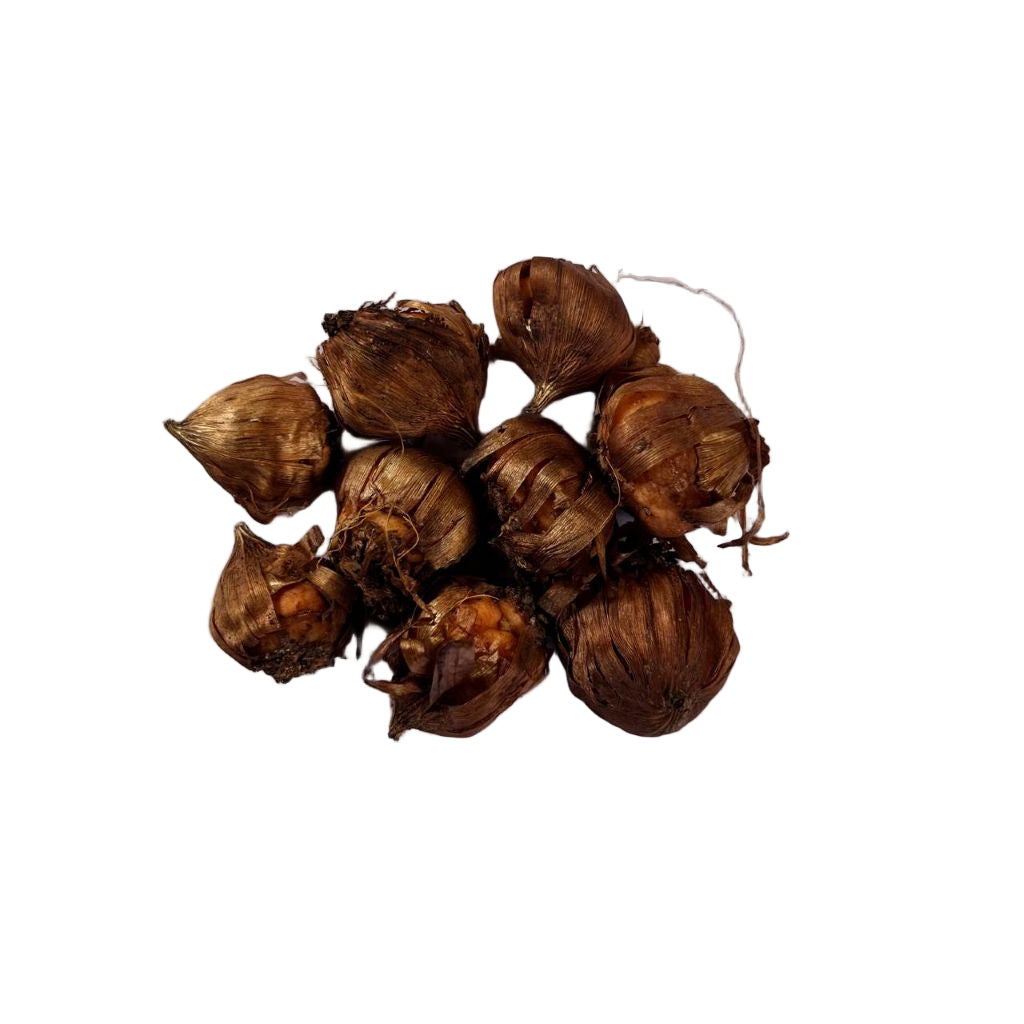
Gladiolus are elegant perennial plants grown from corms, favored by gardeners for their tall, striking flower spikes reaching 2 to 6 feet. Known as the queen of bulbous flowers, they develop from symmetrical, rounded corms wrapped in fibrous brown tunics. The unbranched stems bear 1 to 9 narrow, sword-shaped leaves within protective sheaths, with the lowest leaf reduced to a cataphyll. Wild species exhibit flowers ranging up to 40 mm in diameter, displayed on large, one-sided spikes in diverse colors including pink, red, purple, white, cream, orange, and red. Each bisexual flower is subtended by two green, leathery bracts and features nearly identical tepals united at the base, forming a tubular perianth with a prominent dorsal tepal arching over three stamens and a style divided into three spoon-shaped branches.
Gladiolus ‘Advance’ is a stunning gladiolus variety known for its vivid red blooms that stand tall and bold on sturdy spikes, perfect for container gardening and limited spaces. Blooming occurs from November to February in plains and from December to March in hilly regions. Plant during August to October in plains or August to September in hills.
Environment
Gladioli thrive in well-drained soil and full sunlight. Begin by loosening the soil to a depth of 12 to 15 inches using a garden fork or tiller, then incorporate a 2- to 4-inch layer of compost or aged manure.
Plant bulbs 3 to 6 inches deep, spaced 2 to 3 inches apart, with the flat side facing down. After planting, water thoroughly to settle the soil around the bulbs, followed by consistent weekly soaking rather than frequent light watering.
Roots and stems typically emerge soon after watering, with blooms developing approximately 60 days post-planting. Once flowering begins, you may either leave the blooms on the plant—removing spent flowers to encourage continued growth—or cut them for arrangements. Avoid cutting the foliage after flowering, as leaves continue to photosynthesize and nourish the corms for the following season. After flowering fades, maintain regular watering until leaves yellow and dry. At that stage, lift the bulbs, clean off soil, remove dead foliage, and store them in a cool, dry location until next planting.
Landscape Use
It is a beautiful addition to any garden, and makes a wonderful container plant.


