1.Proper soil preparation is crucial for planting bulbs successfully. Well-draining, loose soil enriched with compost or leaf mold. Ensure excellent drainage; if your soil is clay-heavy, mix in some coco peat.
2.Ensure the bulbs receive 4 to 6 hours of sunlight daily, adjusting the light exposure according to the specific variety—some prefer partial shade while others require full sun.
3.Plant bulbs at a depth two to three times their height (e.g., a 2 cm bulb goes 4–6 cm deep) with spacing depending on size, typically 5–15 cm apart.
4.Water lightly after planting, keep soil moist but not waterlogged during growth, and reduce watering after flowering to let foliage yellow and bulbs enter dormancy. 5.Apply a low-nitrogen, high-potassium fertilizer when shoots emerge and post-bloom.
6.Avoid cutting green leaves immediately after flowering to allow energy storage.
7.Prevent pests and diseases by avoiding overwatering and treating bulbs with neem oil or mild fungicide before planting.
8.Store bulbs off-season by cleaning, drying in shade, and keeping them in breathable containers at 10–20°C with moisture absorbers; avoid sealed plastic and humid conditions.


Daily
Water Requirement

Red
Flower Color

Non Fragrant
Fragrance

Winter & Spring
Flowering Season

Gladiolus
Genus

Medium
Maintenance

No
With Pots

Small
Size
Autumn
Sowing Season

Outdoor Shade,Outdoor Sun
Sunlight Requirement

Balcony,Low Maintenance
Use
Sword Lily
Family
Iridaceae
Origin
Asia, Mediterranean & South Africa
Description
Gladiolus, cultivated from corms or bulbs, are prized perennials admired by gardeners for their impressive floral display. Often referred to as the Queen of bulbous flowers, these plants produce tall stems ranging from 90 to 120 cm (3 to 4 feet) in height. Their large, ruffled blooms measure between 10 and 15 cm and typically appear 80 to 90 days after planting, making them a striking addition to any garden.
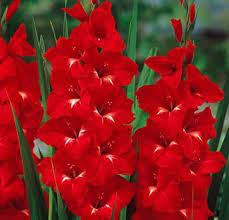
Gladiolus ‘Trader Horn’ stands out with its striking scarlet-red flowers, each featuring a delicate white center blotch. The sizable, velvety petals have a subtle ruffle and are elegantly displayed on a tall, upright spike, making this variety a commanding presence in both garden settings and floral designs.
Gladiolus ‘Trader Horn’ bulbs yield tall, vivid red flower spikes, making them a timeless option for summer floral arrangements. They bloom from November to February in plains and from December to March in hilly areas. Plant between August and October in plains or August and September in hills for optimal growth.
Environment
Gladiolus ‘Trader Horn’ bulbs perform best in well-drained sandy-loam soil rich in organic matter, with full sun exposure for a minimum of 5 to 6 hours daily. Water moderately—apply thoroughly after planting, then maintain consistent moisture without causing waterlogging. Space corms 10 to 15 cm apart and plant them 5 to 8 cm deep for optimal development. Apply a balanced fertilizer, such as 10:10:10 NPK, at planting, then reapply when flower spikes emerge and again during blooming. Avoid overusing nitrogen, as it promotes foliage growth at the expense of flowers.
In India, the sowing period for Gladiolus varies by region:
-
Northern India (Cooler winters):
Sow from October to December (ideal: late October to November) -
Southern & Western India (Warmer winters):
Sow from September to November -
Hill stations (like Ooty, Darjeeling):
Spring planting – March to May
Gladioli generally flower 80 to 100 days after planting, with peak blooming from January to March for autumn or winter sowing in the plains, and from June to August for spring sowing in hill areas.
Landscape Use
It is a beautiful addition to any garden, and makes a wonderful container plant.