1.Proper soil preparation is crucial for planting bulbs successfully. Well-draining, loose soil enriched with compost or leaf mold. Ensure excellent drainage; if your soil is clay-heavy, mix in some coco peat.
2.Ensure the bulbs receive 4 to 6 hours of sunlight daily, adjusting the light exposure according to the specific variety—some prefer partial shade while others require full sun.
3.Plant bulbs at a depth two to three times their height (e.g., a 2 cm bulb goes 4–6 cm deep) with spacing depending on size, typically 5–15 cm apart.
4.Water lightly after planting, keep soil moist but not waterlogged during growth, and reduce watering after flowering to let foliage yellow and bulbs enter dormancy. 5.Apply a low-nitrogen, high-potassium fertilizer when shoots emerge and post-bloom.
6.Avoid cutting green leaves immediately after flowering to allow energy storage.
7.Prevent pests and diseases by avoiding overwatering and treating bulbs with neem oil or mild fungicide before planting.
8.Store bulbs off-season by cleaning, drying in shade, and keeping them in breathable containers at 10–20°C with moisture absorbers; avoid sealed plastic and humid conditions."


Daily
Water Requirement

Purple
Flower Color

Fragrant
Fragrance

Globba
Genus

Low
Maintenance

No
With Pots

Small
Size

Winter
Sowing Season

Outdoor Shade,Outdoor Sun
Sunlight Requirement

Balcony,Low Maintenance
Use
Dancing Ladies Ginger
Family
Zingiberaceae
Origin
Thailand & Vietnam
Description
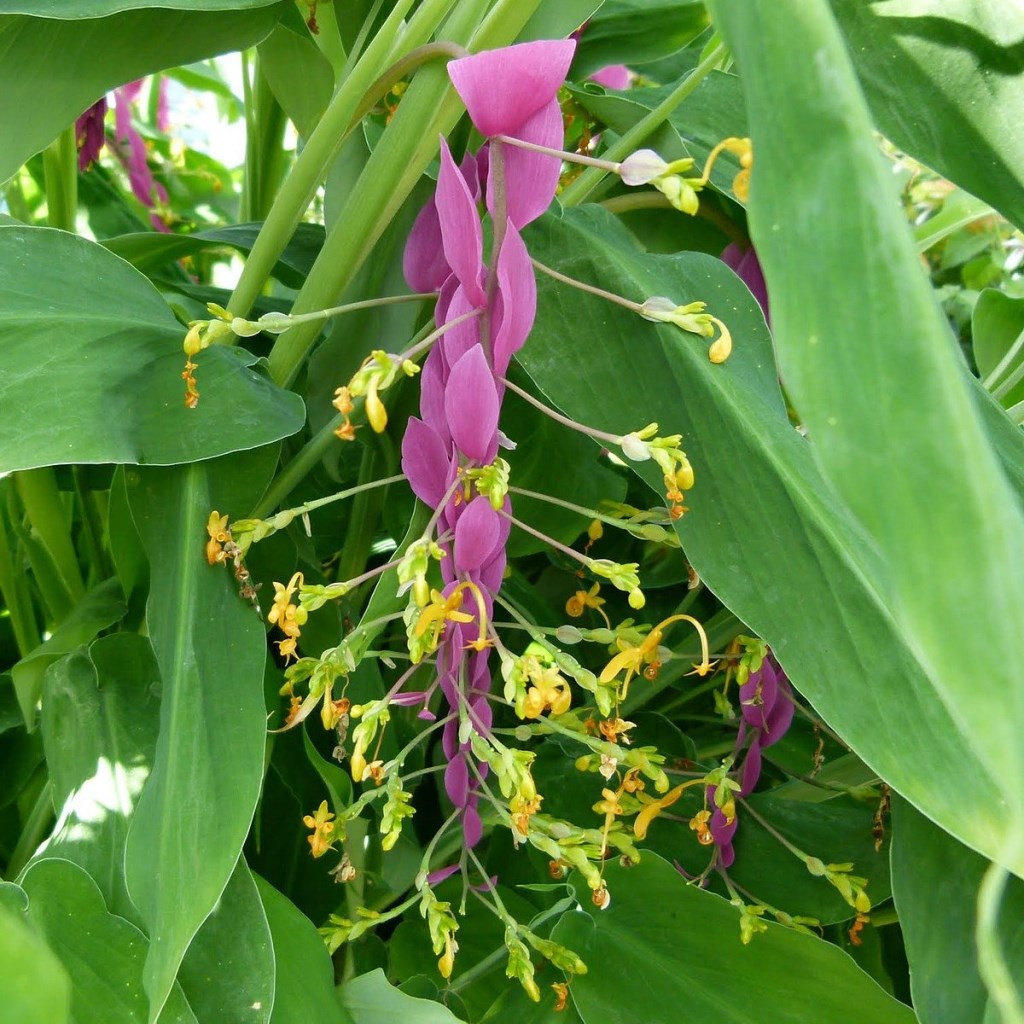
Globba Winitii, commonly known as Dancing Lady, is a compact dwarf ginger reaching 1 to 2 feet with glossy green leaves. Its raceme inflorescence droops gracefully, featuring overlapping magenta ovate bracts that partly conceal the floral stalk. Each small yellow tubular flower, about 2–3 cm long, is displayed on a long purple stalk extending at right angles from the main axis, with a single elongated, curved stamen.
Blooming lasts approximately one month, offering flowers that stay fresh up to two weeks—perfect for floral design. These bulbs thrive in shaded settings, flowering June to September in plains and July to October in hills, with planting recommended from February to April in plains and March to May in hill areas.
Environment
They grow well in shaded areas and seem to do well in pots and containers on shaded patios, conservatories and indoors. They grow well in fertile well drained soil.
To ensure the plant flowers each year you need to to make sure that you cut off the dead leaves at the end of each season.
Keep the rhizomes dry during the winter and feed with organic fertiliser in spring as new leaves appear.
Landscape Use
It is suitable as an ornamental plant in shaded area