
1.Proper soil preparation is crucial for planting bulbs successfully. Well-draining, loose soil enriched with compost or leaf mold. Ensure excellent drainage; if your soil is clay-heavy, mix in some coco peat.
2.Ensure the bulbs receive 4 to 6 hours of sunlight daily, adjusting the light exposure according to the specific variety some prefer partial shade while others require full sun.
3.Plant bulbs at a depth two to three times their height (e.g., a 2 cm bulb goes 4–6 cm deep) with spacing depending on size, typically 5–15 cm apart.
4.Water lightly after planting, keep soil moist but not waterlogged during growth, and reduce watering after flowering to let foliage yellow and bulbs enter dormancy. 5.Apply a low-nitrogen, high-potassium fertilizer when shoots emerge and post-bloom.
6.Avoid cutting green leaves immediately after flowering to allow energy storage.
7.Prevent pests and diseases by avoiding overwatering and treating bulbs with neem oil or mild fungicide before planting.
8.Store bulbs off-season by cleaning, drying in shade, and keeping them in breathable containers at 10–20°C with moisture absorbers; avoid sealed plastic and humid conditions.


Daily
Water Requirement

Blue
Flower Color

Fragrant
Fragrance

Winter
Flowering Season

Low
Maintenance

Muscari
Genus

Small
Size

Outdoor Shade,Outdoor Sun
Sunlight Requirement
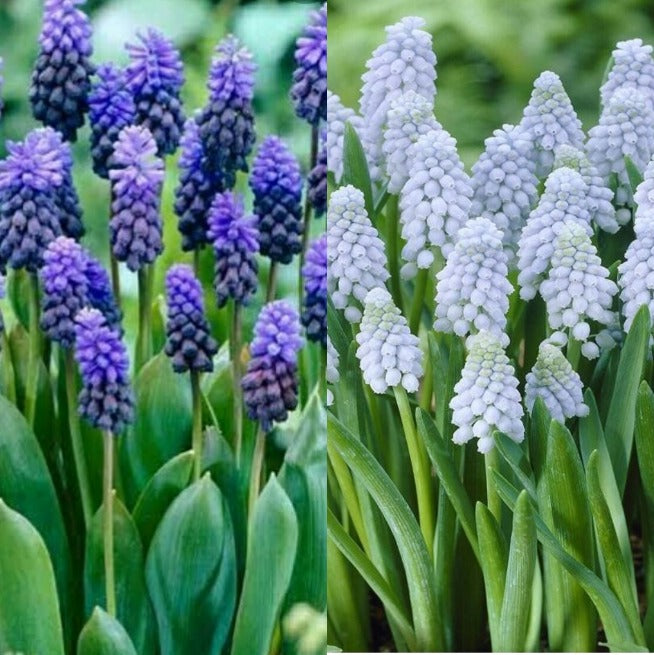
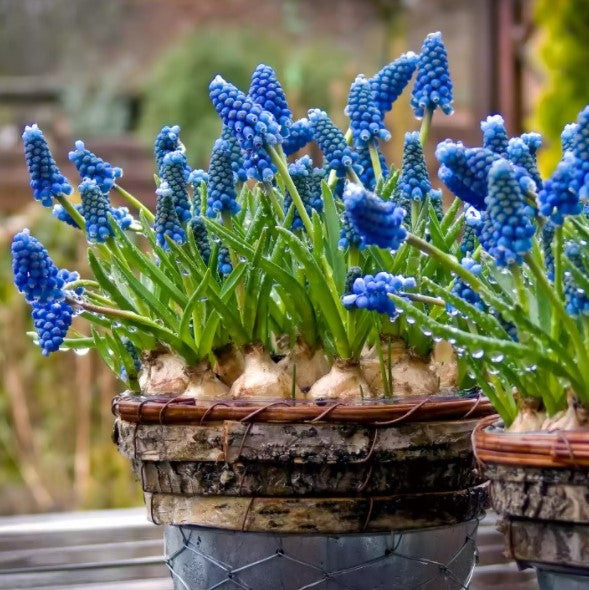
Grape Hyacinth Mix Bulbs (Muscari) are charming spring-flowering bulbs known for their dense clusters of small, grape-like flowers. These bulbs produce vibrant blue, purple, and white blooms, adding a refreshing burst of color to gardens and containers.
🌱 Care Instructions
- Use well-draining soil to prevent bulb rot
- Water regularly during growth phase
- Allow foliage to die back naturally after flowering
- Can be grown in containers, beds, or borders
🌼 Growing Information
- Planting Season: Autumn to early winter
- Blooming Season: Spring
- Sunlight: Full sun to partial shade
- Watering: Moderate; keep soil lightly moist
- Spacing: Plant bulbs close together for dense blooms


