


Non Fragrant
Fragrance

Haworthia
Genus

Low
Maintenance

Yes
With Pots

Small
Size

Indoor Filtered Light,Indoor Interior,Outdoor Shade,Outdoor Sun
Sunlight Requirement

Twice A Week
Water Requirement

Indoor,Low Maintenance,Office
Use
Distinctive White Tear-Like Markings on Sculptural Green Leaves
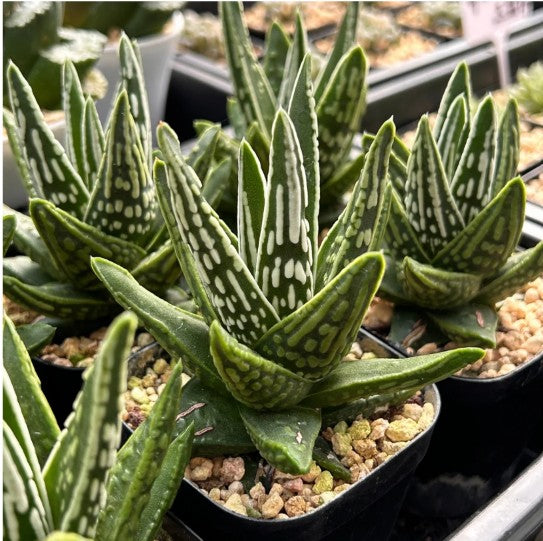
Haworthia pumila 'Tears of Angel' is a distinctive rosette-forming succulent belonging to the Asphodelaceae family and native to South Africa. This ornamental cultivar is prized for its thick, pointed leaves decorated with prominent white, raised markings that contrast beautifully against the deep green foliage. Its compact growth, striking texture and unusual leaf patterns make it an excellent addition to succulent collections and decorative displays.
The plant forms a dense rosette of fleshy, triangular to lance-shaped leaves that grow upright and outward from the centre. The dark green leaves feature irregular white tubercles and elongated markings, creating the distinctive appearance that inspires its name, 'Tears of Angel'. As the plant matures, it can develop a fuller rosette and may produce a slender flower stalk bearing small, inconspicuous flowers. Its sculptural form and contrasting foliage make it particularly attractive in small pots and succulent arrangements.
Environment
Sunlight: Prefers bright, indirect light or partial shade. Gentle morning sunlight can be beneficial, but protect the plant from intense afternoon sun, which may scorch or discolour the leaves.
Watering: Water thoroughly and allow the growing medium to dry between waterings. Avoid frequent watering and prolonged moisture around the roots, as waterlogged conditions can cause root rot. Reduce watering during cooler periods when growth slows.
Soil: Use a gritty, well-draining cactus and succulent mix. Adding perlite, pumice or coarse grit helps improve drainage and aeration around the roots.
Fertilizer: Feed sparingly with a diluted succulent fertilizer during active growth. Avoid excessive fertilization, which is unnecessary for this slow-growing ornamental succulent.
Landscape Uses
- Ideal for succulent collections and miniature plant displays.
- Excellent for decorative pots on desks, windowsills and bright indoor spaces.
- Suitable for rock gardens and sheltered succulent arrangements.
- Works well in mixed succulent planters with contrasting leaf shapes and colours.
- A distinctive choice for collectors who appreciate unusual foliage patterns and textures.


