


Daily
Water Requirement

Multicolor
Flower Color

Non Fragrant
Fragrance

All Seasons
Flowering Season

Heliconia
Genus

Large
Size

Yes
With Pots

Outdoor Shade,Outdoor Sun
Sunlight Requirement

Air Purifier,Balcony
Use
Hanging Lobster Claw
Family
Origin
South Africa
Description
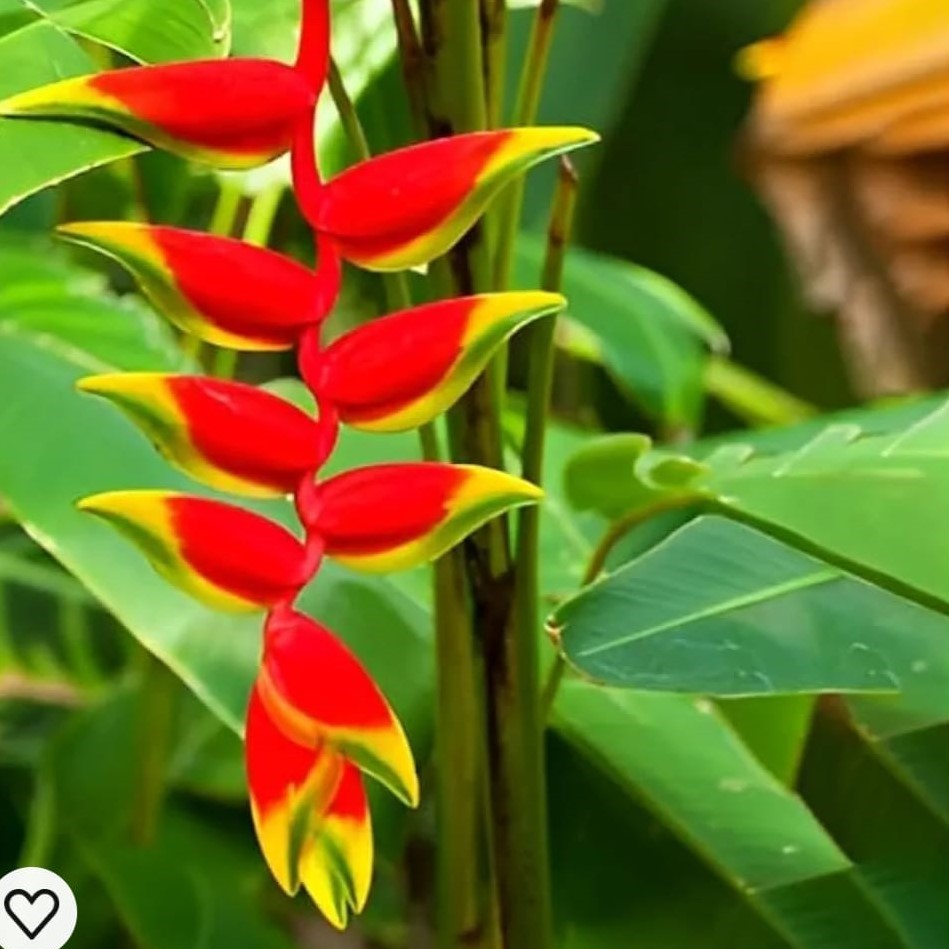
Heliconia Rostrata (Hanging Lobster Claw) is a large, decorative species that is highly cultivated. Its long, leathery, dark green leaves measure up to 4 ft. (120 cm) and are attached to the rhizomatous rootstock. In spring and summer, the plant produces showy flower clusters on 3-5 ft. stems (90-150 cm). These clusters are made up of bright red bracts, each with yellow and green tips, and have yellowish-white flowers. The flowers are rich in nectar and attract hummingbirds, with fleshy, round blue fruits following. These tropical flowers are popular among enthusiasts and are long-lasting, making them perfect for both tropical gardens and arrangements.
Heliconia Rostrata bulbs develop hanging red and yellow lobster claw flowers, creating a bold statement in tropical garden settings. Blooming occurs from June to October in plains and from July to November in hills. Plant bulbs between February and April in plains or from March to May in hill regions.
Environment
The bird of paradise is a low-maintenance plant that can thrive in a variety of growing conditions. Bird of paradise thrives in warm, tropical climates. It can be grown outdoors in a frost-free location with protection from strong winds.
Bird of paradise prefers full sun to partial shade. In hot, direct sun, it may benefit from some afternoon. Use a balanced fertilizer once a month during the growing season (spring and summer) to promote healthy growth and flowering
Landscape Use
It is perfect for poolside plantings, garden borders, along walkways, patio containers, or as a houseplant.


