
1.Proper soil preparation is crucial for planting bulbs successfully. Well-draining, loose soil enriched with compost or leaf mold. Ensure excellent drainage; if your soil is clay-heavy, mix in some coco peat.
2.Ensure the bulbs receive 4 to 6 hours of sunlight daily, adjusting the light exposure according to the specific variety some prefer partial shade while others require full sun.
3.Plant bulbs at a depth two to three times their height (e.g., a 2 cm bulb goes 4–6 cm deep) with spacing depending on size, typically 5–15 cm apart.
4.Water lightly after planting, keep soil moist but not waterlogged during growth, and reduce watering after flowering to let foliage yellow and bulbs enter dormancy. 5.Apply a low-nitrogen, high-potassium fertilizer when shoots emerge and post-bloom.
6.Avoid cutting green leaves immediately after flowering to allow energy storage.
7.Prevent pests and diseases by avoiding overwatering and treating bulbs with neem oil or mild fungicide before planting.
8.Store bulbs off-season by cleaning, drying in shade, and keeping them in breathable containers at 10–20°C with moisture absorbers; avoid sealed plastic and humid conditions.
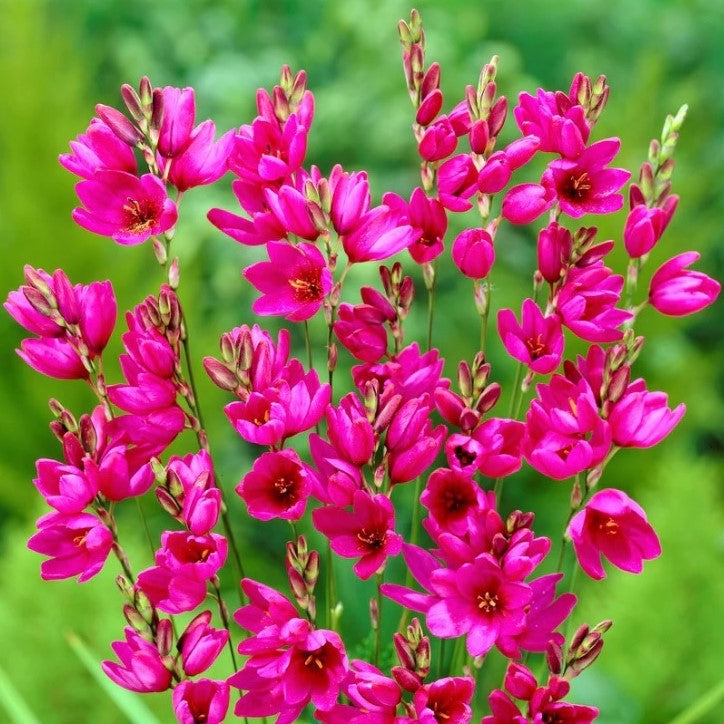
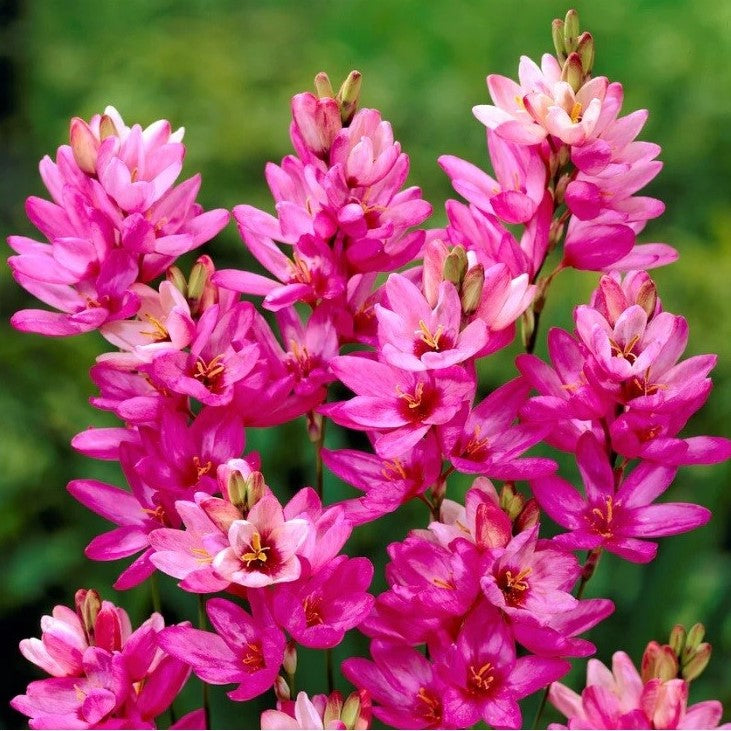


Pink
Flower Color

Winter & Spring
Flowering Season

Ixia
Genus

Medium
Maintenance

Outdoor
Use

Outdoor Sun
Sunlight Requirement

No
With Pots

Small
Size
African Corn Lily
Family
Iridaceae
Origin
South Africa
Description
Ixia (Ixia spp.) is a beautiful flowering plant boasting star-shaped flowers in a range of colours including pink, red, white, blue and purple.
Some distinctive traits include sword-like leaves and long wiry stems with star-shaped flowers. The popular corn lily has specific, not very intense fragrance. It is often visited by many insects such as bees.
Ixia 'Mabel' delivers striking star-shaped blooms in deep purple tones, complemented by rich crimson and brownish-red accents on the petals. These vigorous corms thrive in full-sun positions and perform exceptionally well in border plantings.
Flowering occurs from February to April in plains and March to May in hilly terrain. Optimal planting occurs during October to November across both regions, establishing strong root systems before the growing season.
Environment
Ixia are easily grown in moderately fertile, humus-rich soil that is moist but well-drained. They thrive in full sun or partial shade where they will multiply rapidly and readily. Ixia are also drought tolerant (once established), salt tolerant, deer and rabbit resistant. They should be planted in clumps of 12 or more. Plant the bulbs with the pointy side facing upwards, 8-13 cm deep, spacing them 8-10 cm apart.
Ixia may be grown in containers - make sure you select a large pot with drainage holes.
Landscape Use
Ixia make excellent border plants, providing color and contrast to the perennial border.


