
1.Proper soil preparation is crucial for planting bulbs successfully. Well-draining, loose soil enriched with compost or leaf mold. Ensure excellent drainage; if your soil is clay-heavy, mix in some coco peat.
2.Ensure the bulbs receive 4 to 6 hours of sunlight daily, adjusting the light exposure according to the specific variety some prefer partial shade while others require full sun.
3.Plant bulbs at a depth two to three times their height (e.g., a 2 cm bulb goes 4–6 cm deep) with spacing depending on size, typically 5–15 cm apart.
4.Water lightly after planting, keep soil moist but not waterlogged during growth, and reduce watering after flowering to let foliage yellow and bulbs enter dormancy. 5.Apply a low-nitrogen, high-potassium fertilizer when shoots emerge and post-bloom.
6.Avoid cutting green leaves immediately after flowering to allow energy storage.
7.Prevent pests and diseases by avoiding overwatering and treating bulbs with neem oil or mild fungicide before planting.
8.Store bulbs off-season by cleaning, drying in shade, and keeping them in breathable containers at 10–20°C with moisture absorbers; avoid sealed plastic and humid conditions.


Daily
Water Requirement

White
Flower Color

Non Fragrant
Fragrance

Kaempferia
Genus

Medium
Size

Yes
With Pots

Outdoor Shade,Outdoor Sun
Sunlight Requirement

Balcony,Medicinal
Use
Kaempferia Rotunda
Family
Zingiberaceae
Origin
Asia & SE Asia
Description
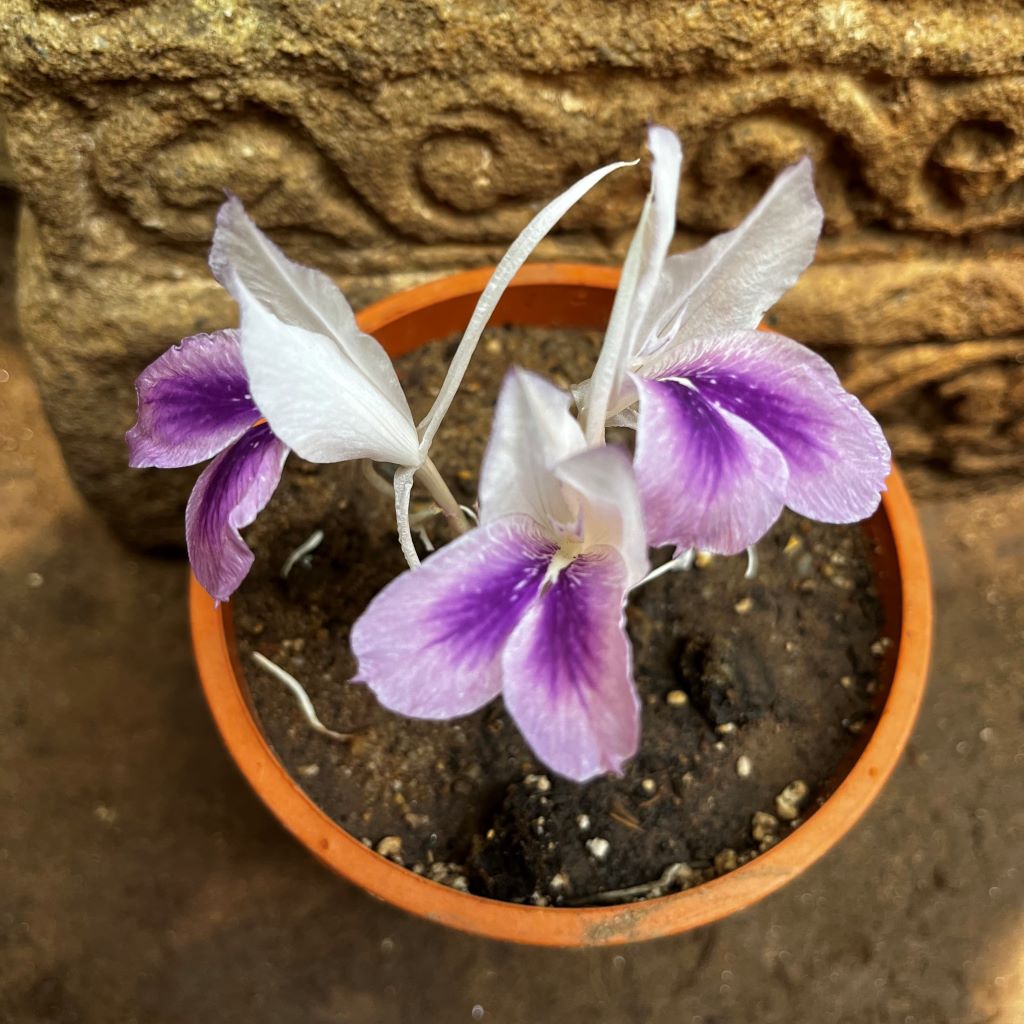
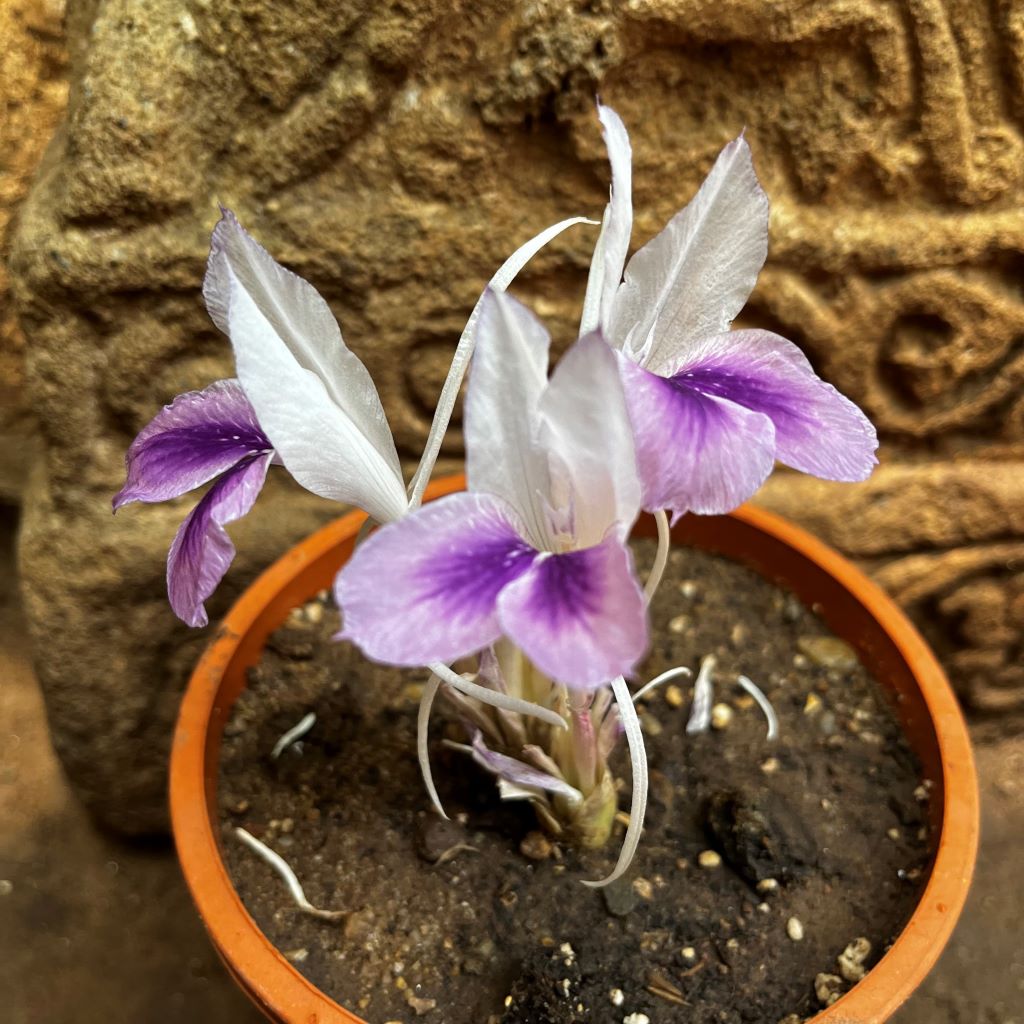
Peacock Ginger is a distinctive small ginger prized equally for its medicinal roots and striking visual appeal. Delicate purple and white flowers emerge first from dormant rhizomes, resembling ornate butterflies with a subtle fragrance that persists for weeks throughout summer. Following the blooms, elegant lanceolate leaves unfold—mid-green with silvery patterns and darker central veining, their undersides a deep purplish-red. This uncommon species thrives in shade, displaying its ornamental foliage after flowering concludes. The plant enters dormancy in winter as leaves fade and rhizomes rest underground.
In plains regions, expect blooms from June to September; in hilly areas, flowering extends from July through October. A sophisticated choice for gardeners seeking both therapeutic benefits and botanical intrigue.
Environment
Rich, well drained soil. Best grown in a container in a warm, sheltered and semi-shady spot. Water and feed well during the growing season
Landscape Use
Its relatively small size ginger that is best suited for growing in a container and kept at table-top height


