
1.Proper soil preparation is crucial for planting bulbs successfully. Well-draining, loose soil enriched with compost or leaf mold. Ensure excellent drainage; if your soil is clay-heavy, mix in some coco peat.
2.Ensure the bulbs receive 4 to 6 hours of sunlight daily, adjusting the light exposure according to the specific variety some prefer partial shade while others require full sun.
3.Plant bulbs at a depth two to three times their height (e.g., a 2 cm bulb goes 4–6 cm deep) with spacing depending on size, typically 5–15 cm apart.
4.Water lightly after planting, keep soil moist but not waterlogged during growth, and reduce watering after flowering to let foliage yellow and bulbs enter dormancy. 5.Apply a low-nitrogen, high-potassium fertilizer when shoots emerge and post-bloom.
6.Avoid cutting green leaves immediately after flowering to allow energy storage.
7.Prevent pests and diseases by avoiding overwatering and treating bulbs with neem oil or mild fungicide before planting.
8.Store bulbs off-season by cleaning, drying in shade, and keeping them in breathable containers at 10–20°C with moisture absorbers; avoid sealed plastic and humid conditions.


Daily
Water Requirement

Purple
Flower Color

Non Fragrant
Fragrance

Winter
Flowering Season

Medium
Maintenance

No
With Pots

Small
Size

Outdoor Shade,Outdoor Sun
Sunlight Requirement

Balcony,Low Maintenance
Use
Dense Gayfeather
Family
Asteraceae
Origin
South Africa
Description
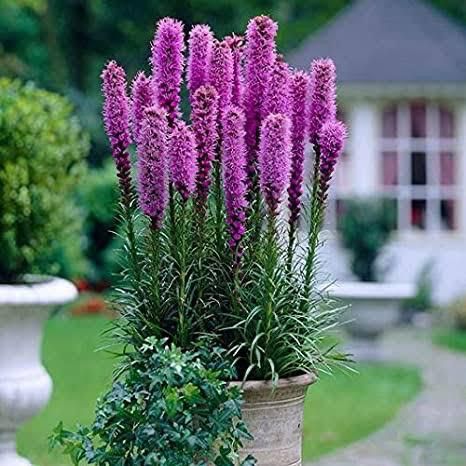
Liatris Spicata, commonly called blazing star or gayfeather, is a resilient perennial wildflower prized for its distinctive bottlebrush-like flower spikes. This hardy specimen produces dense, purple flower heads composed of delicate star-shaped florets arranged vertically along tall, sturdy stems reaching up to 6 feet. The plant develops a basal clump of narrow, linear foliage that transitions to bronze tones during autumn months.
Blooming from June through September depending on climate zone, these striking purple spikes serve dual purposes—attracting pollinators to garden landscapes and providing exceptional cut flower material. The elongated inflorescence and feathery styles characteristic of this species make it botanically distinctive. Plant bulbs between February and May for optimal establishment and flowering performance.
Environment
Liatris Spicata is well-suited for various climates and thrives in full sun exposure.
These bulbs are best planted in the spring following the last frost date, with a spacing of 12 to 15 inches and a depth of two to four inches.
It is essential to choose well-draining soil with a slightly acidic or neutral pH level. Avoid clay or overly rich soil for optimal growth.
When first planted, ensure thorough watering followed by only watering during the hottest months. During winter, it prefers drier conditions.
While not heavy feeders, adding a balanced flower fertilizer in the spring can benefit plants in poor soil conditions. In most cases, these bulbs do not require any additional feeding.
Landscape Use
Incorporate these wildflowers into a border or meadow landscape.


