
1.Proper soil preparation is crucial for planting bulbs successfully. Well-draining, loose soil enriched with compost or leaf mold. Ensure excellent drainage; if your soil is clay-heavy, mix in some coco peat.
2.Ensure the bulbs receive 4 to 6 hours of sunlight daily, adjusting the light exposure according to the specific variety some prefer partial shade while others require full sun.
3.Plant bulbs at a depth two to three times their height (e.g., a 2 cm bulb goes 4–6 cm deep) with spacing depending on size, typically 5–15 cm apart.
4.Water lightly after planting, keep soil moist but not waterlogged during growth, and reduce watering after flowering to let foliage yellow and bulbs enter dormancy. 5.Apply a low-nitrogen, high-potassium fertilizer when shoots emerge and post-bloom.
6.Avoid cutting green leaves immediately after flowering to allow energy storage.
7.Prevent pests and diseases by avoiding overwatering and treating bulbs with neem oil or mild fungicide before planting.
8.Store bulbs off-season by cleaning, drying in shade, and keeping them in breathable containers at 10–20°C with moisture absorbers; avoid sealed plastic and humid conditions.



Daily
Water Requirement

Red
Flower Color

Non Fragrant
Fragrance

Winter
Flowering Season

Lilium
Genus

Medium
Maintenance

No
With Pots

Small
Size

Outdoor Shade,Outdoor Sun
Sunlight Requirement

Balcony,Low Maintenance
Use
Brilliant Deep Red Blooms on Tall, Elegant Stems
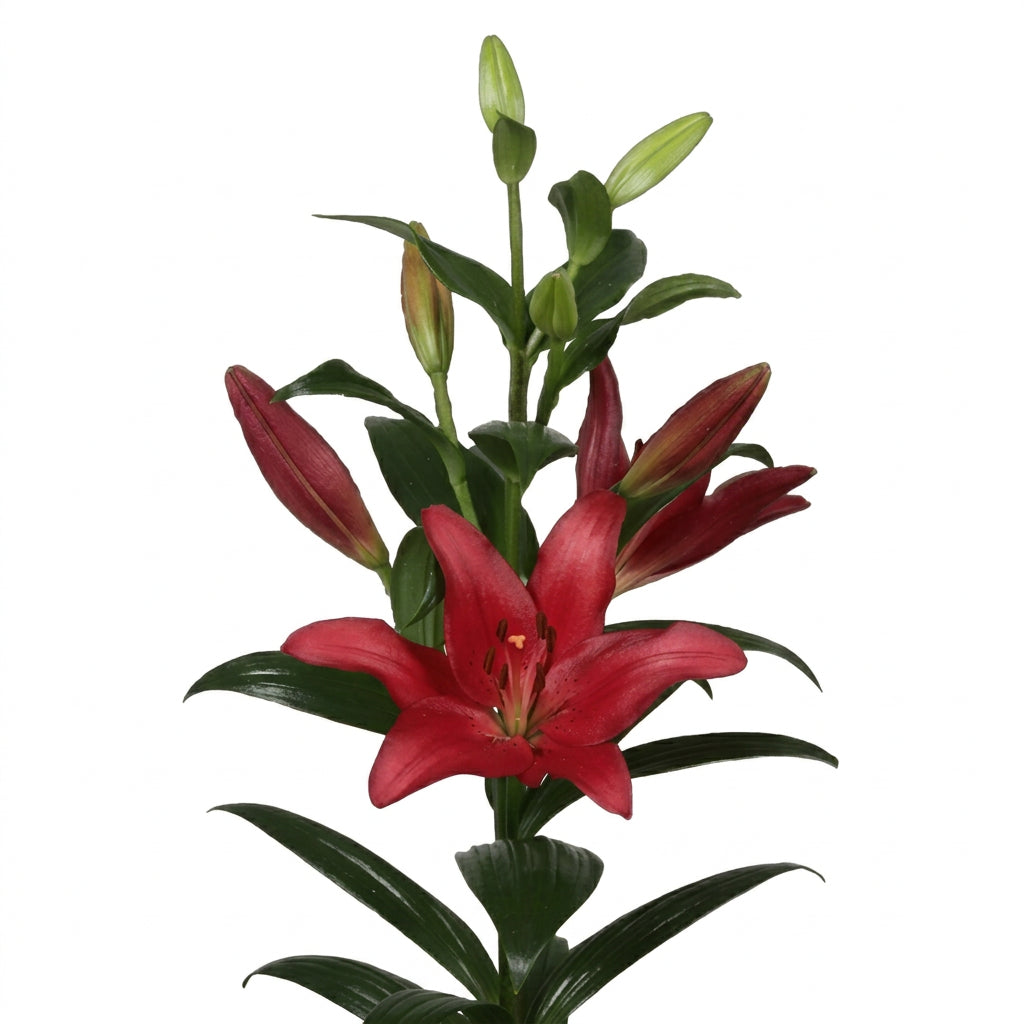
Lilium 'Colares' is a striking flowering bulb belonging to the Liliaceae family and classified as an LA Hybrid Lily, developed through a cross between Longiflorum and Asiatic lilies. This impressive variety is admired for its large, open-faced flowers in rich deep red shades. Its six broad, gently pointed petals display subtle darker markings and delicate variations in colour towards the centre, creating a bold and dramatic floral appearance. The prominent stamens add further definition to its beautiful blooms, while the narrow, dark green foliage provides an attractive contrast.
Colares produces vibrant red flowers on strong, upright stems that can reach approximately 140–150 cm in height under suitable growing conditions. Its striking blooms and tall growth habit make it an excellent choice for seasonal garden displays, flower beds and cut-flower arrangements. According to the breeder's reference, its growing period is approximately 80–90 days, depending on bulb size and growing conditions. The bold red flowers bring rich colour and an elegant presence to gardens and floral displays.
In the Indian plains, lily bulbs are generally planted during October and November, with flowering expected during January and February. In hilly regions, planting is generally carried out during March and April, with flowering expected during July and August. Actual flowering time depends on local temperatures, bulb size, pre-cooling treatment and growing conditions.
Environment
Sunlight: Prefers bright sunlight to partial shade. Provide adequate light for healthy stem development and flowering. In warmer climates, protect plants from intense afternoon sunlight.
Watering: Water regularly during active growth, keeping the soil moderately moist. Allow excess water to drain freely and avoid prolonged waterlogging, which can damage the bulbs.
Soil: Prefers fertile, well-drained soil enriched with organic matter. A loose, slightly acidic to neutral growing medium supports healthy root development.
Fertilizer: Apply a balanced flowering fertilizer during active growth to encourage strong stems and healthy blooms. Incorporate organic compost into the soil before planting.
Landscape Uses
- Excellent for colourful flower beds and seasonal garden displays.
- Ideal for growing in large decorative pots and containers.
- Adds bold colour to mixed flowering borders and garden landscapes.
- Excellent for cut-flower arrangements and decorative bouquets.
- Creates impressive floral displays when planted in groups.


