
1.Proper soil preparation is crucial for planting bulbs successfully. Well-draining, loose soil enriched with compost or leaf mold. Ensure excellent drainage; if your soil is clay-heavy, mix in some coco peat.
2.Ensure the bulbs receive 4 to 6 hours of sunlight daily, adjusting the light exposure according to the specific variety some prefer partial shade while others require full sun.
3.Plant bulbs at a depth two to three times their height (e.g., a 2 cm bulb goes 4–6 cm deep) with spacing depending on size, typically 5–15 cm apart.
4.Water lightly after planting, keep soil moist but not waterlogged during growth, and reduce watering after flowering to let foliage yellow and bulbs enter dormancy. 5.Apply a low-nitrogen, high-potassium fertilizer when shoots emerge and post-bloom.
6.Avoid cutting green leaves immediately after flowering to allow energy storage.
7.Prevent pests and diseases by avoiding overwatering and treating bulbs with neem oil or mild fungicide before planting.
8.Store bulbs off-season by cleaning, drying in shade, and keeping them in breathable containers at 10–20°C with moisture absorbers; avoid sealed plastic and humid conditions.


Daily
Water Requirement

Yellow
Flower Color

Fragrant
Fragrance

Winter
Flowering Season

Lilium
Genus

Medium
Maintenance

No
With Pots

Small
Size

Outdoor Shade,Outdoor Sun
Sunlight Requirement

Balcony,Low Maintenance
Use
Lilium Oriental 'Outback
Family
Liliaceae
Origin
Japan
Description
Lilium is a genus of herbaceous flowering plants growing from bulbs, all with large prominent flowers.
Oriental lilies tend to have large, fragrant, outward-facing facing flowers and come in a wide range of colors including whites, yellows, oranges, pinks, reds and purples. Markings include spots and brush strokes.. Because blooms of many oriental lilies appear to look upwards, they are sometimes referred to as ‘Stargazers’.
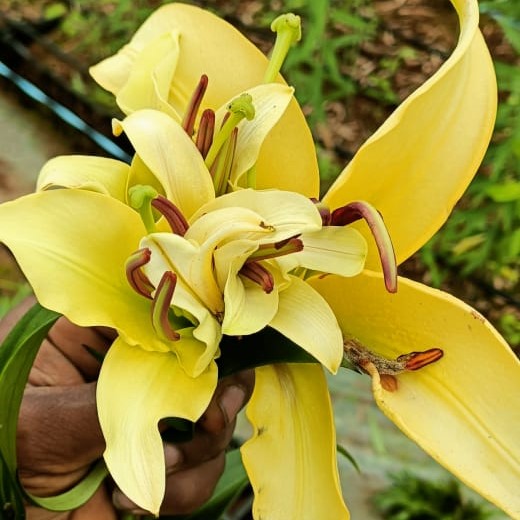
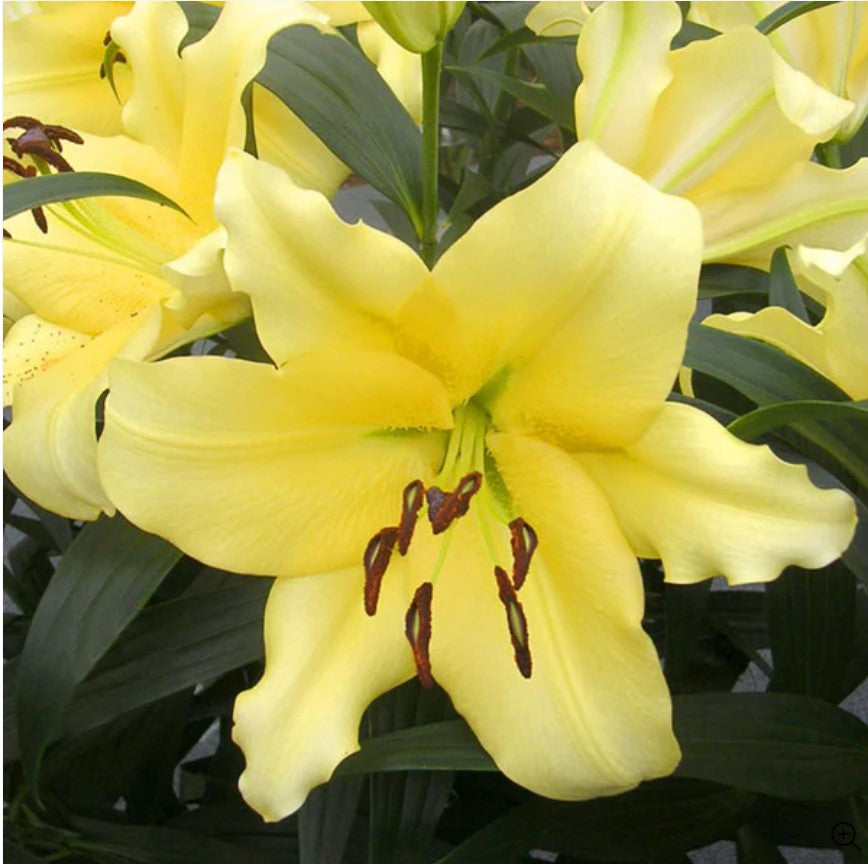
Lilium Oriental 'Outback' bulbs deliver sophisticated, pale yellow blooms with subtle green undertones and an intoxicating fragrance. These majestic lilies tower 3-6 feet tall, significantly outpacing their Asiatic cousins, with characteristic reflexed tepals forming elegant trumpet or turk's-cap formations. Each flower showcases six free tepals with prominent nectaries at the base. Ideal for cutting and display, these late-season bloomers flower December-March in plains and April-June in hill regions. Plant bulbs October-November for optimal establishment and spectacular summer performance in garden beds or borders.
Environment
Lily bulbs can be planted in spring, but getting them into the ground in autumn gives them a head start. Because they are stem rooters and the bulb often anchors a heavy blossom load, it’s critical to sink it at least 6 to 7 inches from top of bulb to top of soil.
Tiger Lilies love full sun, and six hours or more is imperative. Lilies like to have their "head in the sun, feet in the shade." To keep their roots cool, plant them with low-growing annuals, perennials, or grasses. Liliums don't like to be crowded , for healthy growth and good flower production, make sure the plants have enough room around them so sunlight can reach their stems and leaves.
Liliies requires a well drained soil loamy soil. Incorporate organic material into clay soils to increase drainage and nutrients.
Plant lilies in a raised bed to ensure proper drainage. Dig a generous planting hole 8” deep. Put some all-purpose fertilizer in the bottom of the hole and mix it around to disperse. Add a few handfuls of loose soil back into the hole and then position the bulbs so they’re 6 to 7 inches deep. Lilies look best when they are planted in clusters of 3 or more bulbs.
Plant lilies as soon as you get them because the bulbs lack the papery covering (known as a "tunic") that is common to other hardy bulbs, they can dry out quickly in storage.
Landscape Use
The oriental lilies make excellent landscaping additions for flower color in the garden. Their blooms work as great cut flowers making them perfect in flower arrangements


