


Daily
Water Requirement

White
Flower Color

Fragrant
Fragrance

Winter & Spring
Flowering Season

Low
Maintenance

Muscari
Genus

Small
Size

Outdoor Shade,Outdoor Sun
Sunlight Requirement
Pure White Flower Spikes with Pale Green Buds
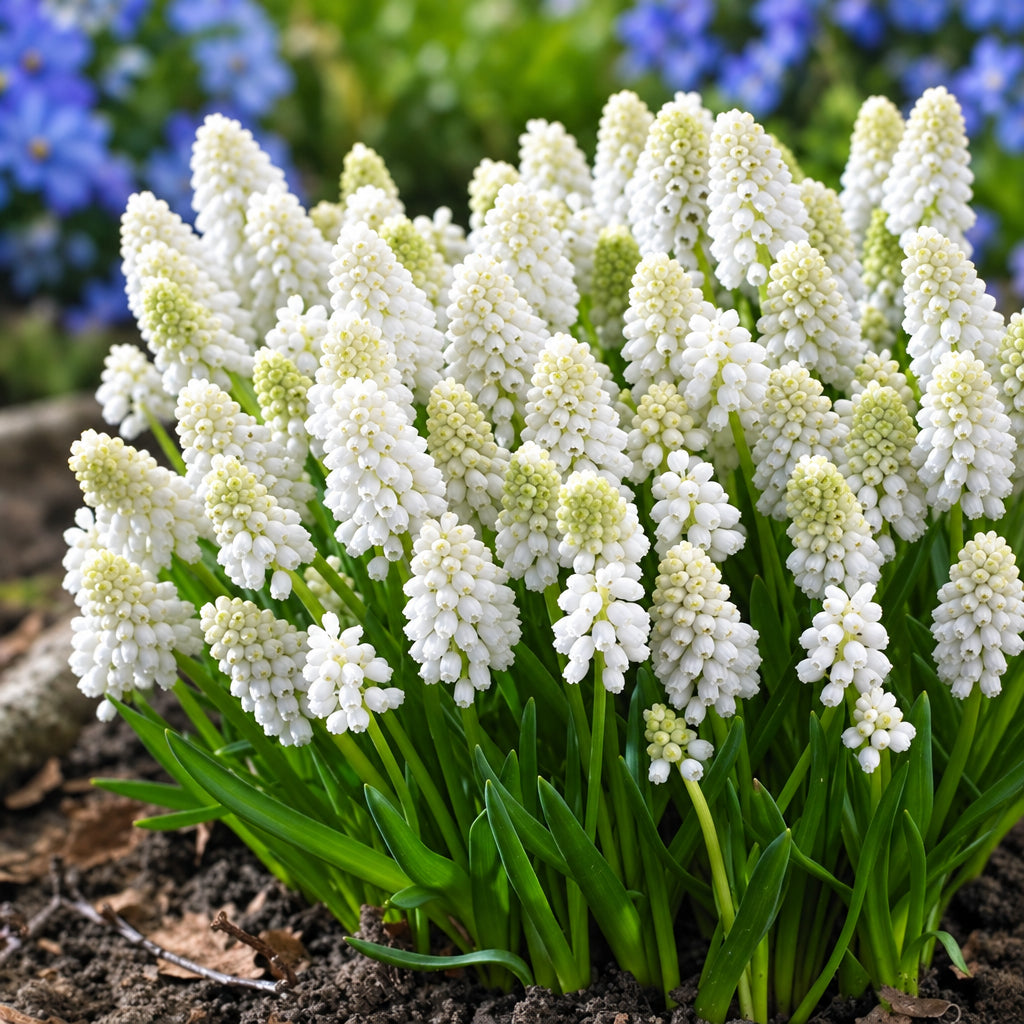
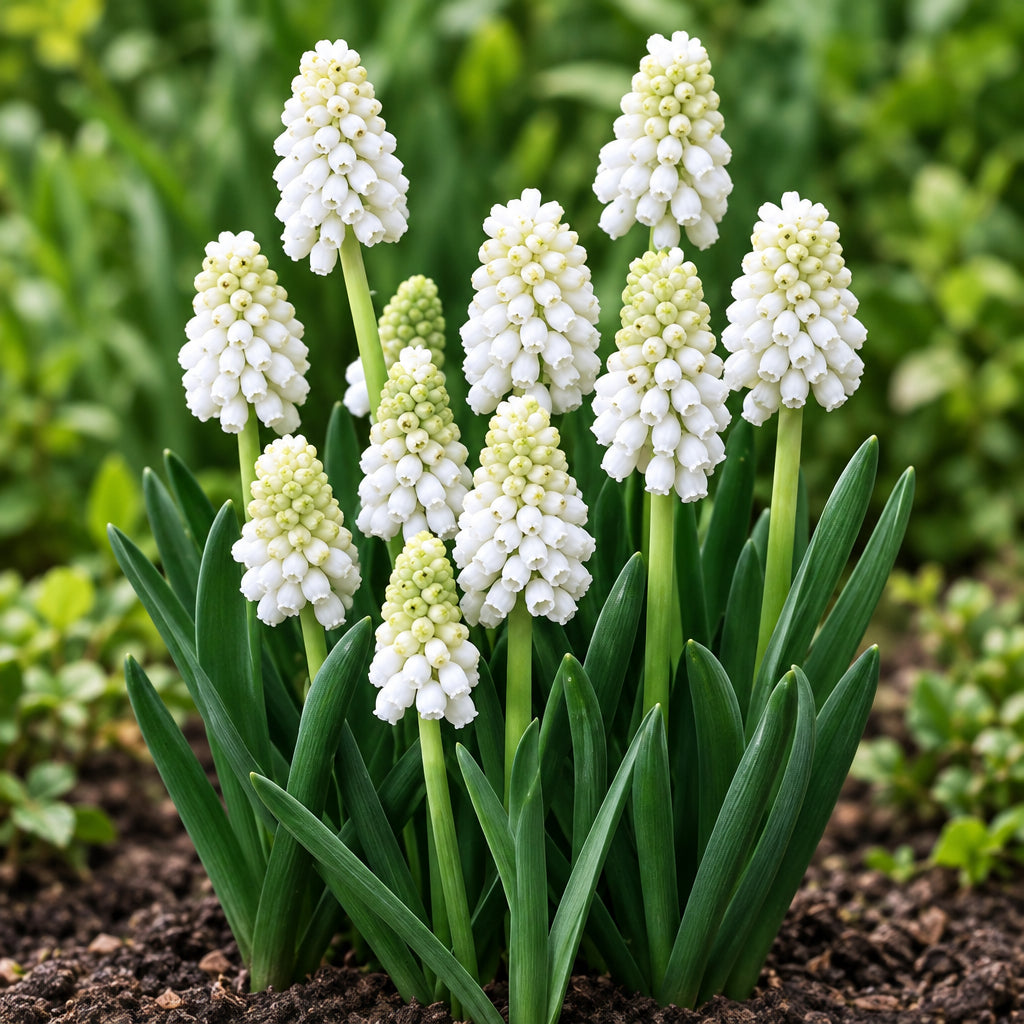
Muscari aucheri 'White Magic', commonly known as White Grape Hyacinth, is a charming spring-flowering bulb belonging to the Asparagaceae family and native to Türkiye. This compact variety is valued for its dense spikes of pure white flowers, which emerge from attractive pale green buds. Its neat clumping habit and distinctive white blooms make it an excellent choice for adding a fresh, elegant touch to gardens and containers.
The plant develops narrow, green, slightly upright leaves from small fleshy bulbs, with each bulb producing short, upright flower stems topped by dense clusters of small, urn-shaped flowers. The buds begin in a pale green shade and gradually open to pure white, creating the characteristic white grape-like flower spikes. The plant generally grows to around 15–20 cm in height, making it particularly suitable for group planting, borders and containers.
Flower Colour & Blooming
The flowers open from pale green buds into dense, pure white flower spikes. The blooms are mildly to pleasantly fragrant and provide a striking contrast against the green foliage. Under Indian growing conditions, flowering can occur from approximately January to March in the plains and February to April in hill areas, depending on local temperature and growing conditions.
Environment
Sunlight: Grows well in full sun to partial shade. Good sunlight encourages compact growth and stronger flowering, while some afternoon protection can be beneficial in very warm locations.
Watering: Provide regular moisture during active growth and flowering, while ensuring that excess water drains freely. Reduce watering as the foliage begins to die back after flowering and avoid keeping the bulbs in soggy soil.
Soil: Prefers fertile, well-drained soil with good drainage. A light or moderately sandy growing medium is particularly suitable. Avoid heavy, continuously wet soil, which can increase the risk of bulb rot.
Fertilizer: Incorporate well-decomposed organic matter into the soil before planting. A suitable bulb fertilizer can be applied during active growth to support healthy foliage and flowering.
Planting Muscari 'White Magic' Bulbs
Plant the bulbs during October to November in suitable Indian growing regions. Plant them in well-drained soil with the pointed end facing upwards, generally at a depth of around 7–10 cm. Planting several bulbs together or in groups creates a fuller and more attractive display of white flower spikes.
Landscape Uses
- Ideal for planting in groups along garden borders and pathways.
- Excellent for rock gardens and small seasonal flower beds.
- Suitable for containers and decorative pots on balconies and patios.
- Works well beneath deciduous trees and shrubs or at the front of mixed borders.
- Plant in clusters to create a fuller display of elegant white flower spikes.


