
1.Proper soil preparation is crucial for planting bulbs successfully. Well-draining, loose soil enriched with compost or leaf mold. Ensure excellent drainage; if your soil is clay-heavy, mix in some coco peat.
2.Ensure the bulbs receive 4 to 6 hours of sunlight daily, adjusting the light exposure according to the specific variety some prefer partial shade while others require full sun.
3.Plant bulbs at a depth two to three times their height (e.g., a 2 cm bulb goes 4–6 cm deep) with spacing depending on size, typically 5–15 cm apart.
4.Water lightly after planting, keep soil moist but not waterlogged during growth, and reduce watering after flowering to let foliage yellow and bulbs enter dormancy. 5.Apply a low-nitrogen, high-potassium fertilizer when shoots emerge and post-bloom.
6.Avoid cutting green leaves immediately after flowering to allow energy storage.
7.Prevent pests and diseases by avoiding overwatering and treating bulbs with neem oil or mild fungicide before planting.
8.Store bulbs off-season by cleaning, drying in shade, and keeping them in breathable containers at 10–20°C with moisture absorbers; avoid sealed plastic and humid conditions.


Balcony
Use

Daily
Water Requirement

Orange & Red
Flower Color

Non Fragrant
Fragrance

Low
Maintenance

Nerine
Genus

No
With Pots

Small
Size

Outdoor Shade,Outdoor Sun
Sunlight Requirement
Guernsey Lily
Family
Amaryllidaceae
Origin
South Africa
Description
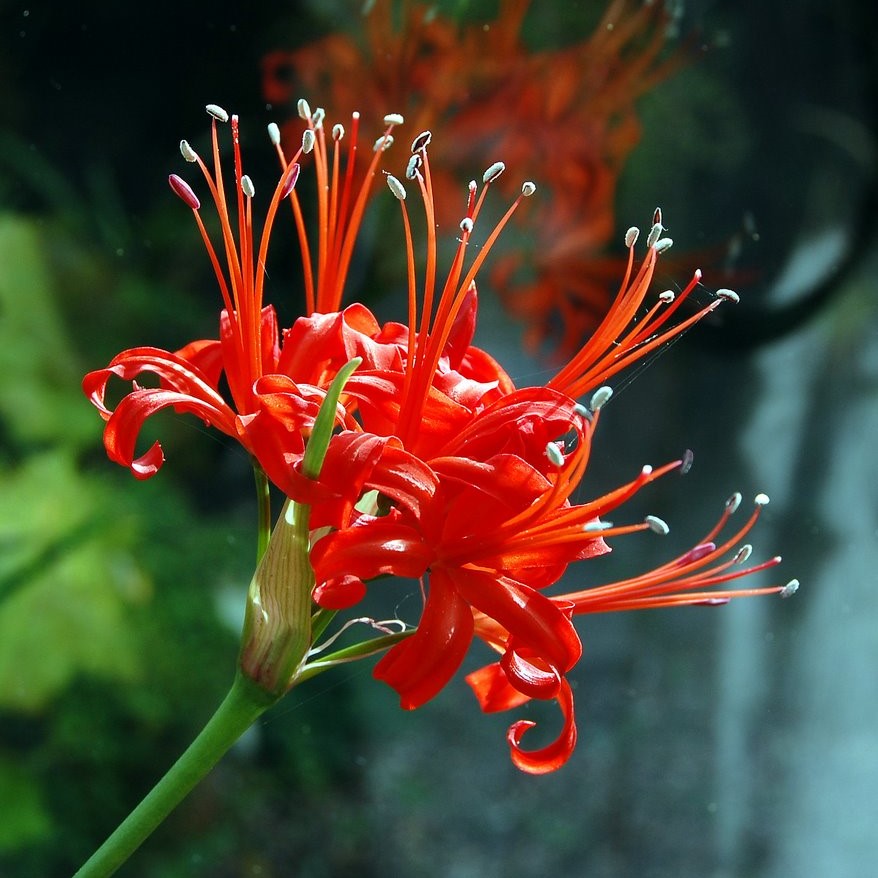
Nerine Sarniensis brings sophisticated autumn elegance with robust stems crowned by clusters of luminous scarlet blooms. Each flower showcases delicately recurved, undulating tepals adorned with prominent stamens bearing distinctive purple anthers, spanning 4cm in diameter.
This bulbous perennial performs consistently across diverse climates, flowering from October through December in both lowland and elevated regions. Narrow, strap-like foliage develops post-bloom. Establish bulbs during February-April in plains or March-April in hill stations for reliable seasonal performance.
Environment
Use a rich, well-drained growing medium, and set the bulbs with the neck well above the soil level so only about half the bulb is buried, approximately 2 in deep to the base. Place the bulbs 6-8 inches apart. The bulbs can be left in the same pot for several years, as they bloom best when crowded. Water freely when the plants have foliage but do not water when the bulbs are dormant. They grow best in full to morning sun.
All nerines are highly susceptible to mealybug infestation.
Landscape Use
Used on trellis or fences. Cut flowers last up to 8 days in floral arrangements.
Caution
All parts of the plant are poisonous ...


