


Daily
Water Requirement

Non Fragrant
Fragrance

No
With Pots

Small
Size

Outdoor Shade,Outdoor Sun
Sunlight Requirement

Balcony,Low Maintenance
Use

Zephyranthes
Genus
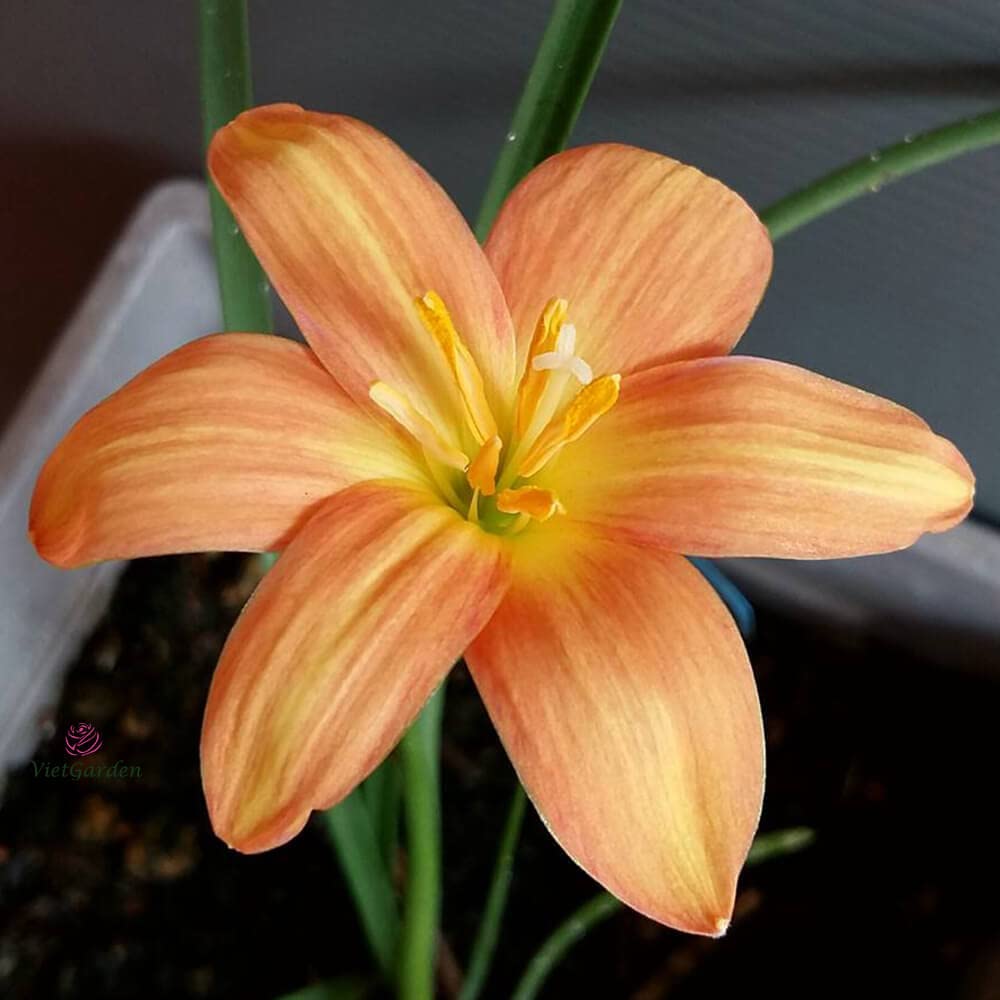
Warm Golden Blooms That Appear After the Rain
Rain Lily 'Golden Mango' is an attractive bulbous perennial from the Amaryllidaceae family, valued for its warm golden-toned flowers and slender, grass-like foliage. The plant forms clumps of narrow, glossy green leaves, with delicate flower stalks rising above the foliage to display its colourful blooms. Its compact growth habit makes it suitable for containers, garden borders, rock gardens and naturalised bulb displays.
Golden Mango produces distinctive tubular flowers with six petal-like segments and prominent yellow stamens. The warm golden-yellow to mango-toned blooms create an attractive contrast against the fresh green foliage. Flowering is often triggered by rainfall or an increase in soil moisture, with successive blooms appearing during the growing season. The plants generally flower from June to September in the plains and July to October in hilly regions. Plant the bulbs between February and April in the plains, or March to May in hilly areas.
Environment
Sunlight: Grow in full sun for the best flowering, although light partial shade can be tolerated in areas with intense afternoon heat. Adequate sunlight encourages healthy growth and better flowering.
Watering: Keep the soil moderately moist during active growth. Rain Lilies often respond positively to rainfall or thorough watering with fresh flowers, but avoid keeping the bulbs in continuously wet soil.
Soil: Prefers fertile, loose and well-drained soil that allows excess moisture to escape easily. Incorporating compost or other organic matter can improve soil quality and support healthy bulb growth.
Fertilizer: Apply a balanced bulb or flowering fertilizer during the active growing period. Occasional organic compost or well-rotted manure can also help maintain healthy foliage and flowering.
Landscape Uses
- Excellent for pots, planters and balcony gardens.
- Suitable for edging along pathways and small garden borders.
- Works well in rock gardens and naturalised bulb plantings.
- Plant in groups for a fuller display of golden-yellow flowers.
- A colourful choice for monsoon gardens and seasonal flowering displays.
```


