
1.Proper soil preparation is crucial for planting bulbs successfully. Well-draining, loose soil enriched with compost or leaf mold. Ensure excellent drainage; if your soil is clay-heavy, mix in some coco peat.
2.Ensure the bulbs receive 4 to 6 hours of sunlight daily, adjusting the light exposure according to the specific variety some prefer partial shade while others require full sun.
3.Plant bulbs at a depth two to three times their height (e.g., a 2 cm bulb goes 4–6 cm deep) with spacing depending on size, typically 5–15 cm apart.
4.Water lightly after planting, keep soil moist but not waterlogged during growth, and reduce watering after flowering to let foliage yellow and bulbs enter dormancy. 5.Apply a low-nitrogen, high-potassium fertilizer when shoots emerge and post-bloom.
6.Avoid cutting green leaves immediately after flowering to allow energy storage.
7.Prevent pests and diseases by avoiding overwatering and treating bulbs with neem oil or mild fungicide before planting.
8.Store bulbs off-season by cleaning, drying in shade, and keeping them in breathable containers at 10–20°C with moisture absorbers; avoid sealed plastic and humid conditions.


Daily
Water Requirement

White
Flower Color

Fragrant
Fragrance

Summer
Flowering Season

Large
Size

Low
Maintenance

Outdoor Shade,Outdoor Sun
Sunlight Requirement
Single Petal Rajnigandha
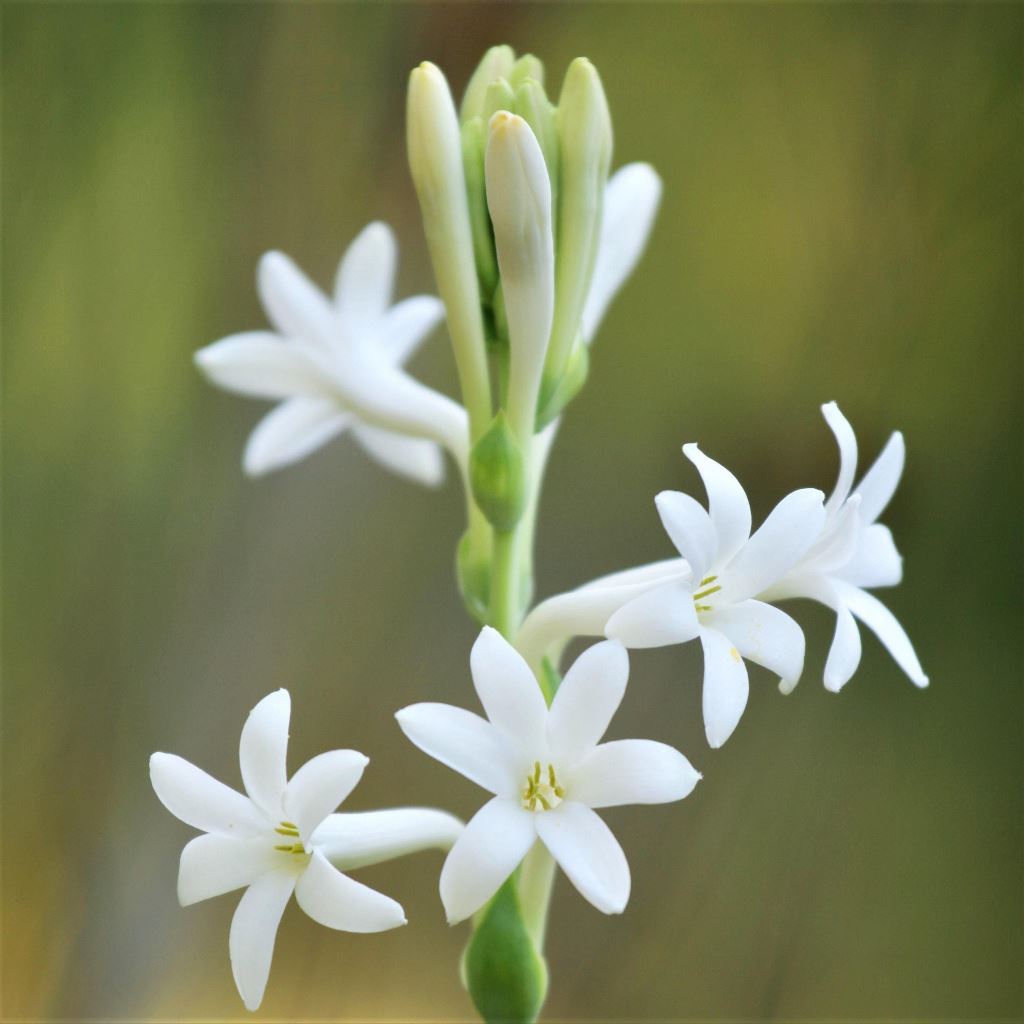
Tuberose (Polianthes tuberosa) is a perennial of the asparagus family (Asparagaceae), native to Mexico. It grows from tuberous roots, producing bright green leaves clustered at the base with smaller clasping leaves along the stem.
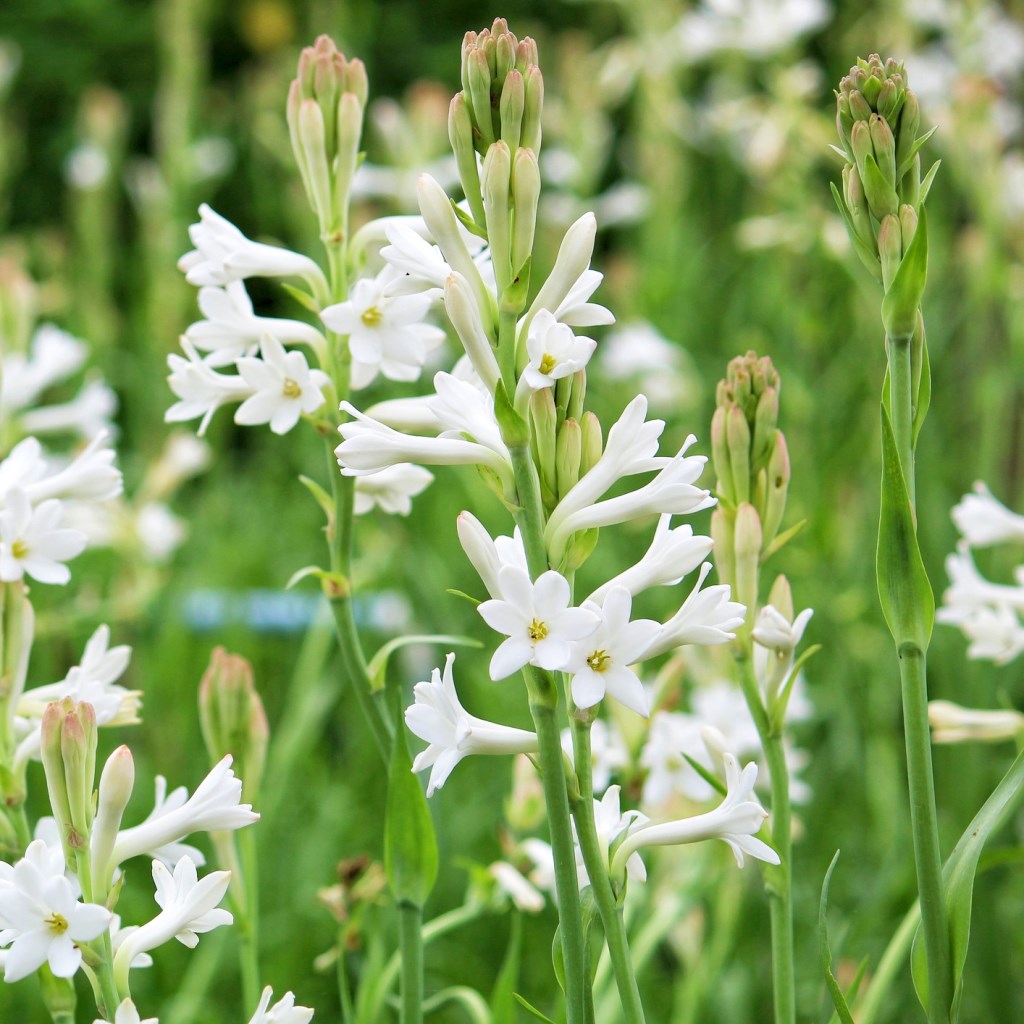
The plant develops tall spikes up to 3 ft, bearing pure white, waxy tubular flowers. Each bloom flares into six segments (tepals) and releases a rich fragrance at night, making tuberose highly valued for its perfume and ornamental beauty.
Mexican Tuberose Single Petal bulbs yield elegant white flowers with a single row of petals, celebrated for their intense fragrance—often stronger than double-petaled types. Widely used in garland making, they bloom July–October in plains and August–November in hill regions. Planting from February–April (plains) or March–May (hills) ensures vigorous bulbs that return each season with their signature nocturnal fragrance and striking blooms.
Planting & Care
Tuberose thrives best in sunny locations and requires full sunlight to bloom. Well-drained loamy soil with a pH of 6.5–7.5 is ideal for healthy growth.
Plant bulbs in the fall, 3–4 inches deep and 2 inches apart, in any well-drained soil for good results. Flowers typically appear in mid to late summer, about 90–120 days after planting.
Tuberose needs a rest period during winter to ensure strong summer blooms. The plants are heavy feeders and benefit from applications of 8-8-8 fertilizer during active growth.
Bone meal at planting and after blooming further supports healthy bulbs. Reduce watering once foliage begins to die back to prepare the plant for dormancy.
Landscape Use
Tuberoses are excellent in the garden or in pots. Their tall stems (2-3 ft.) and rather sparse, grass-like foliage make them ideal for inter-planting.


