
Sansevierias, apart from being a great air purifier, thrive with minimal care and live for many years, making it the perfect houseplant!
Place sansevierias in moderately bright or filtered light. Good location would be a north-facing window or in front of a bright and sunny window. Although the plant is known to tolerate very low light levels, bright light brings out the colours in the leaves while also keeping it healthy. Keep them away from direct sun.
Allow the soil to go completely dry before watering. When you do water it, make sure to. Water it deeply enough for the water to come out of the drainage hole. Never allow water to stagnate on top of the soil or do not make the soil soggy as that will lead to root rot. You can water it once a week in summers and once in 2 weeks in winters if kept in bright filtered light. After watering the plant, make sure to keep it in a bright area.
Use a fast and well draining soil to keep your Sansevieria as root rot is one of the main reason that kills the plant. You can fertilise it once a month.


Non Fragrant
Fragrance

Low
Maintenance

Once a Week
Water Requirement

Yes
With Pots

Sansevieria
Genus

Small
Size

Outdoor Shade,Outdoor Sun
Sunlight Requirement

Air Purifier,Balcony
Use
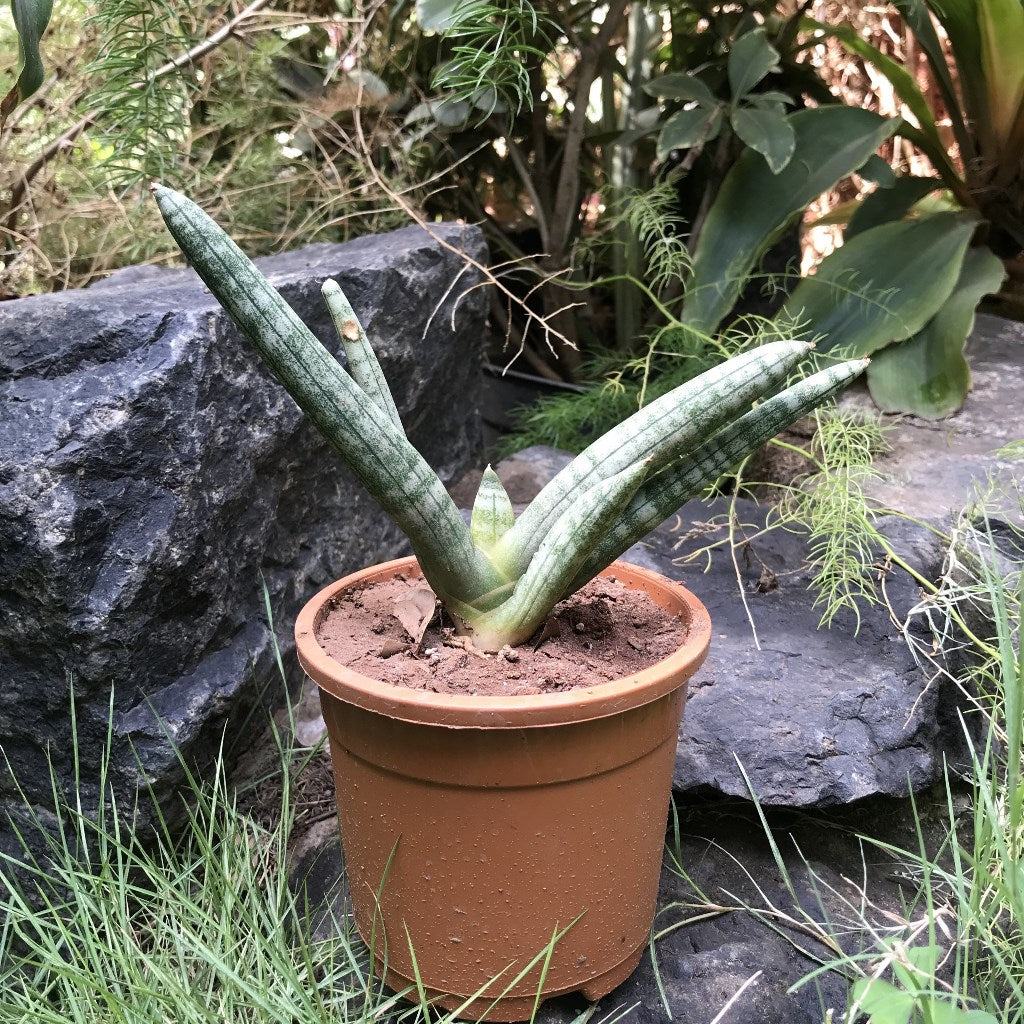
Sansevieria Cylindrica Starfish (also known as Starfish Snake Plant) is a compact, architectural houseplant featuring thick, cylindrical leaves that grow in a unique fan or star shape. Native to arid regions of Africa, this drought-tolerant succulent is ideal for beginners and busy plant lovers. Its ability to thrive in low light and purify indoor air makes it perfect for homes, offices, and gifting.
This hardy indoor plant requires minimal watering, tolerates neglect, and adapts easily to a variety of indoor environments. With its sculptural form and slow growth habit, the Starfish Snake Plant adds a modern aesthetic while improving indoor air quality.
Specifications & Plant Care
Origin: South Africa
Family: Asparagaceae
Height: 90–200 cm tall
Light: Thrives in bright indirect light to full sun and also tolerates low-light conditions, making it perfect for homes and offices.
Watering: Allow the top inch of soil to dry between watering during the growing season. In winter, water sparingly to prevent root rot and avoid watering the leaf rosette.
Humidity: Prefers moderate humidity. Light misting during summer helps maintain healthy foliage.
Temperature: Ideal range is 16–24°C (60–75°F). Tolerates normal indoor temperature fluctuations but avoid extreme cold.
Soil: Use a loose, well-drained potting mix or soilless medium.
Fertilizer: Feed with a mild cactus fertilizer during the growing season; avoid fertilizing in winter.
Air Purifying: Known to remove toxins like formaldehyde, xylene, and toluene while converting CO₂ to oxygen at night.
Landscape Uses: Ideal as a statement accent plant or for mass planting in planters, balconies, offices, and garden beds.


