

Best Summer Flower Seeds
for Indian Gardens
Everything you need to know — sowing calendar, city-specific growing tips, common mistakes to avoid, and honest variety guides for India's heat-loving flowers.

India's summer — that fierce stretch from March through June — can feel like a challenge for gardeners. The afternoon heat, the dry winds, the relentless sun. But if you choose the right seeds and sow them at the right time, summer is actually one of the most rewarding seasons to grow flowers from scratch in India.
This guide covers everything you actually need: when to sow different varieties, which flowers genuinely survive Indian summers (and which ones struggle), what mistakes are worth avoiding, and how conditions differ across cities. Product links are included for each variety mentioned, but this is primarily a practical growing guide rather than a product catalogue.
📌 This guide is written for Indian growing conditions — from hot plains like Ahmedabad and Delhi, to moderate climates like Bengaluru and Pune. See the regional tips section for city-specific advice.
What Makes a Good Summer Flower?
Not every flower seed survives an Indian summer. The varieties that thrive share a common set of traits — understanding these helps you pick seeds that will actually perform, rather than disappoint.
- Heat tolerance: The ability to germinate and grow at 30–42°C without wilting or going dormant. Many European cottage flowers like Snapdragon and Pansy are not suitable for hot plains during peak summer.
- Drought resilience: Containers and grow bags on terraces dry out much faster than ground soil — especially in May and June. The best summer flowers tolerate occasional missed waterings.
- Sun endurance: Six or more hours of direct sunlight is typical for Indian balconies. Good summer flowers need this, rather than merely tolerating it.
- Fast germination: In warm soil (25–35°C), most summer annuals germinate within 5–10 days. If seeds take significantly longer, they may be cool-season types or the soil may be too wet.
- Continuous blooming: Annual varieties that bloom over several months — especially ones that respond well to deadheading — give the best visual return per sowing and make the most of India's long warm season.
🗓️ Summer Sowing Calendar for India
Timing is the single most important factor in growing summer flowers successfully. Sow too early when it's still cool and seeds may germinate slowly or rot. Sow too late and plants won't establish properly before the monsoon arrives.
The table below reflects realistic sowing windows based on Indian conditions — not generic international guides.
| Flower | Best Sowing Window | Notes |
|---|---|---|
| Zinnia | February – April | Direct sow; germinates in 5–7 days in warm soil |
| Celosia (Plumosa & Cristata) | February – June | Longest sowing window; continues into early monsoon |
| Vinca | March – June | Excellent for hot plains; blooms through monsoon without rotting |
| Marigold (Durango Series) | February – April | Sow early; peak heat in May+ reduces germination rate |
| Marigold (Bonanza Series) | February – May | Slightly more heat-tolerant than African; compact for pots |
| Gaillardia | February – March | Perennial; establish before peak heat for summer blooms |
| Salvia | February – March | Start indoors 8–10 weeks before transplanting |
| Gerbera | February – March | Start indoors; needs established roots before summer heat |
| Cosmos | Oct – Feb (hot plains) / Feb – March (Bengaluru, hill stations) | Struggles in peak heat in Ahmedabad and Delhi; better in moderate climates |
🌺 Variety Guide: 10 Summer Flowering Seeds for India
These ten varieties are proven performers in Indian conditions. Each entry covers growing behaviour, what to realistically expect, and what to watch for.

1. Zinnia Zahara Mix
Zinnias are arguably the easiest summer flower to grow from seed in India — and the Zahara Mix is one of the most reliable cultivars. The plants are compact, mildew-resistant, and produce a continuous flush of oranges, pinks, reds, and yellows from late March right through to the monsoon.
Direct sow after temperatures consistently stay above 22°C at night. Thin seedlings to 20–25 cm apart. They attract butterflies reliably and hold up well as cut flowers.
💡 In Ahmedabad, Zinnias sown in early March reach peak bloom by April–May. Avoid overhead watering — water at the base to prevent fungal spots on leaves.

2. Celosia Plumosa Glow Pink
Celosia is one of the most heat-tolerant flowers you can grow. The Plumosa type produces tall, feathery plumes that bloom for months and hold their colour even in harsh sun — a trait many flowers lack by late summer. The blooms also dry beautifully, retaining colour long after cutting.
Unlike many annuals that fade by May, Celosia blooms right through the monsoon, making it unusually versatile for Indian conditions.
💡 One of the safest choices for hot, semi-arid cities like Ahmedabad. Tolerates temperatures above 40°C better than most ornamental annuals.
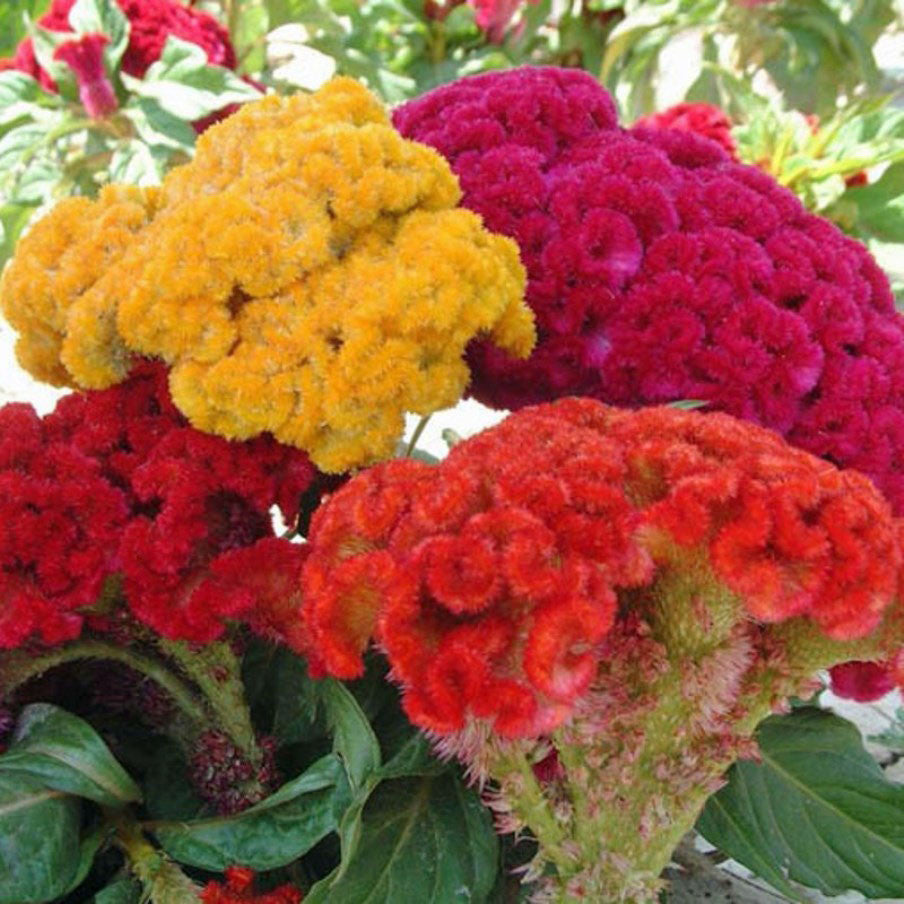
3. Celosia Cristata Dwarf Coral Garden Mix
The Cristata (crested) form of Celosia produces velvety, fan-shaped flower heads that look unlike anything else in a summer garden. In the Coral Garden Mix, you get warm coral, salmon, pink, and gold shades in compact plants suited to small pots and balcony containers.
Like Plumosa, it handles heat and monsoon humidity without complaint. Slightly slower to germinate — allow 10–14 days rather than the typical 5–7.
💡 Keep the sowing medium consistently moist during germination. Once established, Cristata is quite forgiving about irregular watering.

4. Gaillardia Mesa Yellow
Gaillardia (Blanket Flower) is a perennial — it comes back year after year — and is one of the most drought-tolerant ornamentals available. The Mesa Yellow produces large, golden-yellow daisy-like blooms on sturdy stems from spring through summer, and requires minimal care once established.
Being a perennial, first-year blooms may be fewer as the plant focuses on root development. Subsequent years are significantly more prolific.
💡 A good choice for gardeners who travel or cannot water daily. Works particularly well for exposed south or west-facing balconies where other plants struggle.

5. Marigold Durango Mix
Marigolds have been part of Indian gardens for centuries, and with good reason. Marigold Durango Mix produces large, fully double blooms in vibrant shades of gold, orange and red that handle heat well. They also act as useful companion plants, as their distinctive scent helps deter aphids and whiteflies from nearby plants.
Pinch growing tips when seedlings are 10–12 cm tall to encourage bushy, multi-stemmed plants with more blooms rather than a single tall stem.
💡 Among the easiest seeds for beginners. Germination is fast and reliable in warm soil. Avoid overwatering during germination — soggy soil is a more common cause of failure than dryness.

6. Marigold French Bonanza Mix
French Marigolds are more compact than African types — ideal for balcony railings, window boxes, and smaller pots. They produce bicoloured blooms in red, orange, and yellow, are free-flowering through the warm season, and slightly more heat-tolerant than African Marigolds at the height of summer.
They work particularly well as border edging along pathways or in a mixed container with taller plants behind them.
💡 French types can be sown a little later (into May) than African types without significant loss of performance. Useful if you missed the early sowing window.
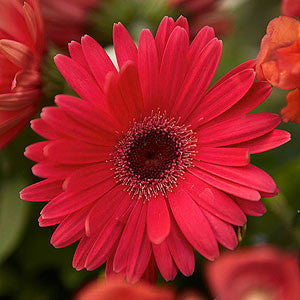
7. Gerbera Mega Revolution Formula Mix
Gerberas are among the world's most recognisable cut flowers, and growing them from seed is entirely possible — though they require more attention than most summer annuals. The Mega Revolution Mix produces large daisies in red, orange, yellow, pink, and white on long elegant stems.
Start seeds indoors 8–10 weeks before transplanting. Gerberas need well-drained soil and don't tolerate waterlogging — crown rot from overwatering is the most common failure point.
💡 Not recommended for complete beginners. But if you enjoy a challenge, successfully growing Gerbera from seed is genuinely satisfying. Keep the crown above soil level when planting out.
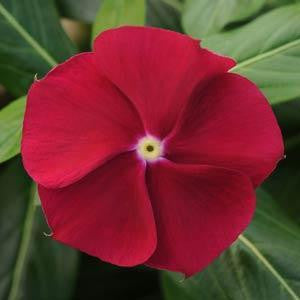
8. Vinca Pacifica XP Dark Red
Vinca (Catharanthus roseus) is one of the most underrated flowers for Indian summer gardening. It is genuinely heat-tolerant, drought-resistant, self-cleaning (no deadheading required), and blooms non-stop from early summer through the entire monsoon season without rotting — a rare combination.
The Pacifica XP Dark Red produces intense crimson flowers with a glossy sheen against deep green foliage. Virtually maintenance-free once established.
💡 In Ahmedabad, Vinca is one of the most reliable performers throughout May and June. It genuinely thrives where other flowers flag. If you can only sow one thing this summer, this is a strong candidate.
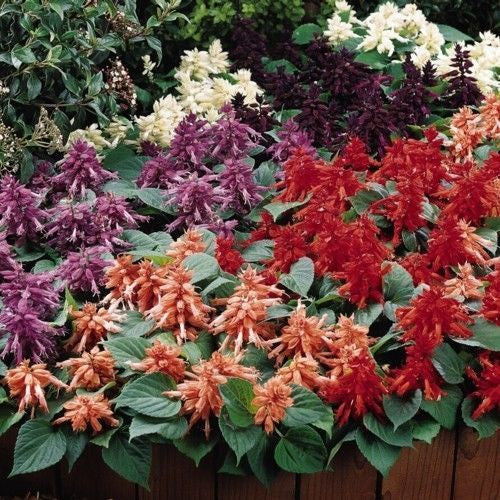
9. Salvia Vista Mix
Salvia adds upright, vertical structure to garden plantings — something many summer annuals lack. The Vista Mix combines rich reds, purples, and whites in compact plants that bloom through the warm season. Salvias are strongly attractive to bees and butterflies, making them a good choice if pollinator support is a goal.
Start indoors 8–10 weeks before planting out, or direct sow in spring. Regular deadheading encourages continued blooming significantly.
💡 Salvia pairs very well with Marigold and Zinnia in mixed plantings — the different heights and flower shapes complement each other visually.

10. Cosmos Sonata Mix
Cosmos bring a light, airy, cottage-garden feel with their feathery foliage and delicate daisy-like blooms in pinks, whites, and crimsons. The Sonata Mix is a compact dwarf variety well-suited to pots and containers. Direct sow and thin as needed — Cosmos bloom quickly and continue for months once flowering begins.
Important note for hot plains: Cosmos performs best during the cooler months in cities like Ahmedabad and Delhi. In these regions, sow from October to February for winter and spring blooms. In moderate climates such as Bengaluru and Pune, it can also be grown successfully from February to March for summer flowering.
💡 If you're in Bengaluru, Cosmos is a brilliant choice. If you're in Ahmedabad or Delhi, grow it in winter-spring instead — you'll get far better results.
🌱 How to Sow Summer Flowering Seeds Successfully
Most summer flower seeds are easy to grow in India's warm climate — but a few consistent practices make the difference between patchy germination and a healthy batch of seedlings.
| Step | What to Do | Why It Matters |
|---|---|---|
| Timing | Sow Feb–March (pre-summer) or April–May for warm-season types like Celosia and Vinca | Plants need time to establish root systems before peak heat |
| Sowing Medium | Use well-draining potting mix or cocopeat + compost blend | Heavy clay or garden soil compacts in containers and prevents drainage |
| Sowing Depth | Sow most seeds 2–3x their own diameter deep. Tiny seeds can be pressed onto the surface | Too deep delays germination; too shallow means seeds dry out quickly |
| Watering | Keep medium moist but never waterlogged. Use a spray bottle during germination | Soggy soil causes damping off — a fungal condition that kills seedlings at soil level |
| Temperature | Place in a bright, warm spot. Most summer seeds prefer 25–32°C for germination | A south or west-facing balcony is typically ideal in Indian winters and early spring |
| Thinning | Once seedlings are 3–4 cm tall, thin to the strongest plant per cell or clump | Overcrowded seedlings compete for nutrients and light, resulting in weaker plants overall |
| Transplanting | Do not transplant during afternoon heat. Early morning or evening is ideal | Transplanting in midday sun stresses roots significantly; evening allows overnight recovery |
⚠️ Common Mistakes When Growing Summer Flowers
Most failures with summer flower seeds come down to a handful of avoidable mistakes. These are the ones that come up most often.
-
💧
Overwatering seedlings New gardeners often assume more water means healthier plants. In summer heat, seedlings in containers dry out fast — but waterlogged soil is far more damaging than dry soil. Check moisture 2 cm below the surface before watering again. If it's still damp, skip that day.
-
🌱
Sowing too deep Small seeds like Celosia should simply be pressed onto the surface of moist growing medium rather than buried. Even larger seeds like Zinnia only need to be covered by about 5–6 mm. Sowing too deep is a common cause of poor germination.
-
☀️
Transplanting in the afternoon Moving seedlings to their final pot or bed during afternoon sun causes significant transplant shock. Roots are disturbed and have no time to rehydrate before facing peak heat. Always transplant in the evening — seedlings have the entire night to settle before the next day's sun.
-
🪨
Using heavy clay or garden soil in containers Ground soil in pots compacts over time, preventing drainage and suffocating roots. Use a well-draining potting mix, preferably containing cocopeat, compost or vermicompost, and materials that improve drainage such as perlite or coarse sand. This provides the right balance of moisture retention and aeration for healthy root growth.
-
🌿
Applying nitrogen fertilizer excessively High-nitrogen fertilizers promote lush leaf growth at the expense of flowers. For flowering annuals, switch to a phosphorus-rich fertilizer (or a balanced slow-release type) once the plant is established. Over-fertilizing with nitrogen is a common reason why healthy-looking plants refuse to bloom.
-
✂️
Not deadheading spent flowers Once a flower sets seed, the plant considers its job done and slows down blooming. Removing spent flowers before they form seeds tells the plant to keep producing more blooms. For annuals like Zinnia, Marigold, and Salvia, regular deadheading can extend the flowering period by weeks.
🗺️ Regional Growing Tips for Indian Cities
India's gardening conditions vary significantly across the country. The same variety that thrives in Bengaluru may need to be timed completely differently in Ahmedabad or Delhi. Here is what experience from each climate suggests.
🌡️ Ahmedabad & Hot Semi-Arid Plains
- Vinca is among the most reliable summer flowers — genuinely thrives above 40°C
- Celosia (both Plumosa and Cristata) performs very well; long flowering window
- Zinnia is excellent if sown by early March; sowing in May is risky
- Cosmos struggles in May–June heat — grow it in October–February instead
- Use grow bags or elevated containers to avoid waterlogging during monsoon
- Consider shade cloth (30–40%) for seedlings during peak afternoon hours in May
🌿 Bengaluru & Moderate Climates
- Longer flowering season than most cities — plants continue well into the cooler months
- Cosmos can genuinely be grown from February–March with good results
- Gerbera is more feasible here than in hot plains — temperatures rarely exceed 36°C
- Almost all varieties on this list will perform well; focus on drainage rather than heat protection
- Monsoon is heavier here — ensure containers have good drainage holes
🏙️ Delhi & North Indian Plains
- Sow earlier than Ahmedabad — Delhi summers arrive fast and peak heat is intense in May–June
- February sowing is ideal for Zinnia, Marigold, and Gaillardia
- Vinca is again a standout performer; handles Delhi's dry summer heat well
- Avoid sowing heat-sensitive varieties (Cosmos, Gerbera) after March
- Mulch container surfaces to reduce soil temperature and moisture loss
🌊 Mumbai & Coastal Cities
- High humidity means fungal issues are more common — avoid overhead watering
- Celosia and Vinca handle humidity particularly well
- Ensure excellent air circulation around plants to prevent powdery mildew on Zinnia
- Monsoon arrives early — time plantings so flowers are past peak before heavy rains
- Salinity from sea air can affect some varieties; flush containers with fresh water periodically
🪴 Choosing the Right Containers and Growing Medium
Container choice matters more in Indian summers than in most other climates. Soil in small terracotta pots can heat above 45°C in direct afternoon sun — roots cook rather than grow.
- Fabric grow bags: Provide excellent aeration through the sides, keeping roots significantly cooler than plastic or terracotta in peak summer. Highly recommended for balcony gardening with annuals like Zinnia, Marigold, and Celosia.
- Pot size: Larger pots retain moisture longer and buffer temperature extremes better. For most summer annuals, a minimum of 8–10 inches depth is recommended. Avoid very small pots (under 5 inches) for outdoor summer growing.
- Growing medium: A mix of cocopeat, vermicompost, and perlite gives most summer annuals the drainage and nutrition they need. Avoid using plain garden soil in containers — it compacts and does not drain adequately.
- Mulching: A 1–2 cm layer of dry cocopeat or dried leaves on the soil surface reduces temperature, slows evaporation, and suppresses weeds. Particularly helpful in May and June.
- Fertilizing: A slow-release organic fertilizer at planting time provides steady nutrition. Switch to a liquid phosphorus-rich feed (diluted, every 2–3 weeks) once plants begin budding to encourage flower production over leaf growth.
❓ Frequently Asked Questions
Yes — many summer annuals like Zinnia, Marigold, Cosmos, and Celosia can be direct-sown into their final container. Sow 2–3 seeds per pot, then thin to the strongest seedling once germination occurs. The advantage is that roots are never disturbed by transplanting. The disadvantage is that you use up pot space before knowing if germination is successful.
Vinca (Catharanthus), Celosia (both Plumosa and Cristata), and Zinnia are the most reliable at temperatures above 40°C. Marigold manages well up to about 38°C but may slow down in extreme heat. Most other flowering annuals prefer temperatures below 35°C for optimal performance.
Zinnia is the most reliably butterfly-attracting summer annual in Indian gardens — particularly the warmer-coloured varieties. Salvia is strongly attractive to bees and some butterflies. Marigold and Gaillardia also attract pollinators, though less dramatically than Zinnia.
Vinca has the longest continuous blooming period of any variety on this list — from early summer straight through the monsoon and beyond, often for 5–6 months without a break. Celosia is a close second. Zinnia and Marigold also bloom profusely for several weeks, especially when spent flowers are removed regularly.
Yes, but your options are narrower. May sowing works well for Celosia, Vinca, and French Marigold. Zinnia can still be sown in May in many regions but germination may be slower in extreme heat. Avoid sowing Cosmos, Gerbera, or Salvia in May in hot plains — these need more temperate conditions to establish properly.
Leggy seedlings are almost always caused by insufficient light. The seedlings are stretching toward a light source. Move them to a brighter location — ideally with 4–6 hours of direct morning sun. Avoid keeping seedlings indoors under artificial light unless it's a proper grow light positioned close to the plants.
Choose compact varieties specifically bred for container growing: Zinnia Zahara Mix, French Marigold Bonanza, Celosia Cristata Dwarf, and Vinca Pacifica are all excellent for small spaces. Use fabric grow bags or deep containers (8–10 inches minimum). Group pots together to create a microclimate with slightly higher humidity and shade for each other's lower leaves.
Wrapping Up
Summer gardening in India is genuinely rewarding when you work with the climate rather than against it. The key is variety selection — choosing flowers that are built for heat rather than trying to force cool-season plants through a challenging season.
Start with Vinca and Celosia if you're in a hot city and want something near-guaranteed. Add Zinnia and Marigold for colour variety. Experiment with Gaillardia and Salvia once you have the basics in place. And if you're in a moderate climate like Bengaluru, almost everything on this list is available to you.
The sowing calendar, regional tips, and common mistakes sections above should give you a practical foundation. Happy gardening!
Explore Flower Seeds
Browse our collection of flower seeds with detailed growing information, including summer annuals, seasonal favourites, and many more varieties for Indian gardens.
Explore the Collection →Looking for more inspiration? Read our guides on summer flowering plants and best flowering bulbs for summer blooms.


