
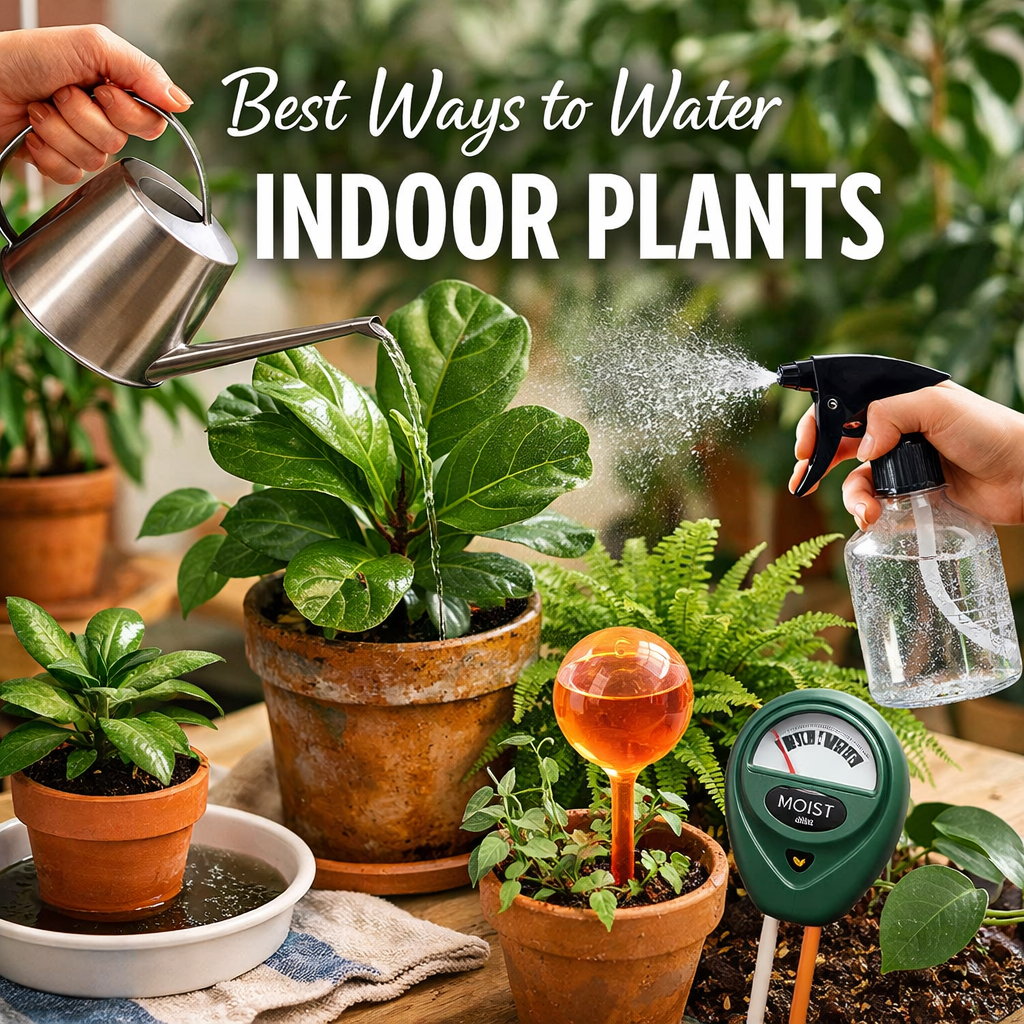
Best Ways to Water Indoor Plants
The plant lovers, owning a garden must know the hacks of watering the indoor plants and this blog points out some of the best ways of watering indoor plants. This blog will prove to be an interesting read for all gardening enthusiasts.
Indoor plant watering is an art. If you are interested in keeping a few houseplants to improve the aesthetic appeal of your interior space, you have to know how to care for them well – starting with watering. Here are some of the best ways to water your indoor plants.
💧 Water from the bottom

Soak a number of plants simultaneously in a deep tray or saucer with 1–2 cm water so that nutrients do not drain out and watering is more uniform. Place your pots inside and let them soak up water for 1–2 hours, then remove to dry. You may also use self-watering pots & planters to avoid under or over-watering.
🪨 Try layering with clay pebbles

You can add a layer of clay pebbles to keep moisture around the plant for longer. Place gravels, regular pebbles, or clay water-retaining pebbles above the soil to reduce evaporation. These are easily available in nurseries or online. Explore our growing media collection for clay pebbles.
🌱 Check the soil
To know whether soil has moisture, insert a toothpick or finger into the top 2 inches. If soil sticks, it’s moist; if gaps appear between soil and pot edge, it’s dry. During summer, water more frequently. Always ensure pots have drainage holes to prevent stagnation.
☀️ Best Time of Day
Morning watering is ideal as plants absorb moisture before the day’s heat. Avoid late evening watering to reduce fungal risks.
🍂 Seasonal Adjustments
- Summer: Water more often; check soil daily for thin-leaved plants.
- Winter: Reduce watering; growth slows and evaporation is lower.
- Monsoon: Watch for overwatering and root rot; ensure drainage.
🚨 Signs of Overwatering vs. Underwatering
- Overwatering: Yellowing leaves, mushy stems, fungus gnats.
- Underwatering: Dry, crispy leaves, drooping stems, soil pulling away from pot edges.
🌵 Know your plant

Different plants have different water needs:
- Thin-leaved plants like Pothos, Syngonium, Philodendron, Night Blooming Jasmine, Madhu Malti, Jasmine varieties, and other Ornamental Outdoor plants need daily watering or frequent moisture checks.
- Thick-leaved plants like Adenium, Agaves & Cactus, Sansevieria, and Succulents prefer dry soil and need less water.
India-specific schedules: Succulents need watering once every 7–10 days in winter, but twice a week in summer. Cactus generally need watering twice a week in summer and once a week in winter.
💦 Water Quality
Use room-temperature water. Rainwater or filtered water is better than hard tap water. Avoid cold water directly on roots.
🌬️ Humidity Hacks
- Group plants together to create a microclimate.
- Use pebble trays or humidifiers for tropical foliage plants.
- Mist thin-leaved plants occasionally, but avoid misting succulents/cacti.
❓ Quick FAQs
- How often should I water succulents? → In India, once every 7–10 days in winter, twice a week in summer.
- How often should I water cactus? → Twice a week in summer, once a week in winter.
- Can I water with ice cubes? → Not recommended; uneven melting can shock roots.
- Should I mist orchids? → Yes, lightly, but avoid water pooling in leaves.
🌿 Final Note
By understanding these simple hacks — bottom watering, layering with clay pebbles, checking soil moisture, seasonal adjustments, and knowing your plant type — you can keep your indoor plants healthy and thriving. Explore our full indoor plant collection to find the perfect greenery for your home.


