


Medium
Maintenance

Malpighia
Genus

Yes
With Pots

Small
Size

Indoor Filtered Light,Outdoor Shade
Sunlight Requirement

Twice A Week
Water Requirement

Gifting,Living Room,Vastu/Good Luck
Use
Compact Evergreen Foliage with Delicate Flowers and Red Berries
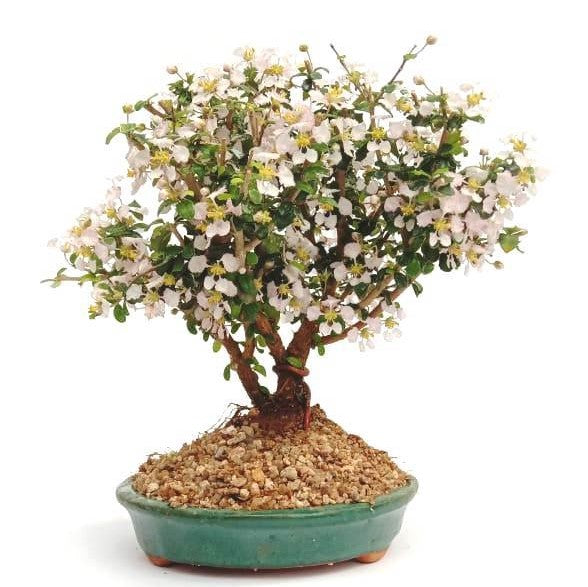
Malpighia Coccigera Mame Bonsai, commonly known as Singapore Holly or Dwarf Holly, is a compact evergreen bonsai from the Malpighiaceae family. Despite its common name, it is not a true holly. The plant is valued for its small, shiny leaves and naturally compact growth, making it particularly suitable for the miniature scale of a Mame bonsai.
This charming miniature tree produces delicate flowers during the winter period, followed by attractive red berries. Its evergreen foliage remains green throughout the year, providing continuous ornamental interest even outside the flowering and fruiting periods. The compact size and fine foliage make it well suited to tabletop bonsai displays and small bonsai collections.
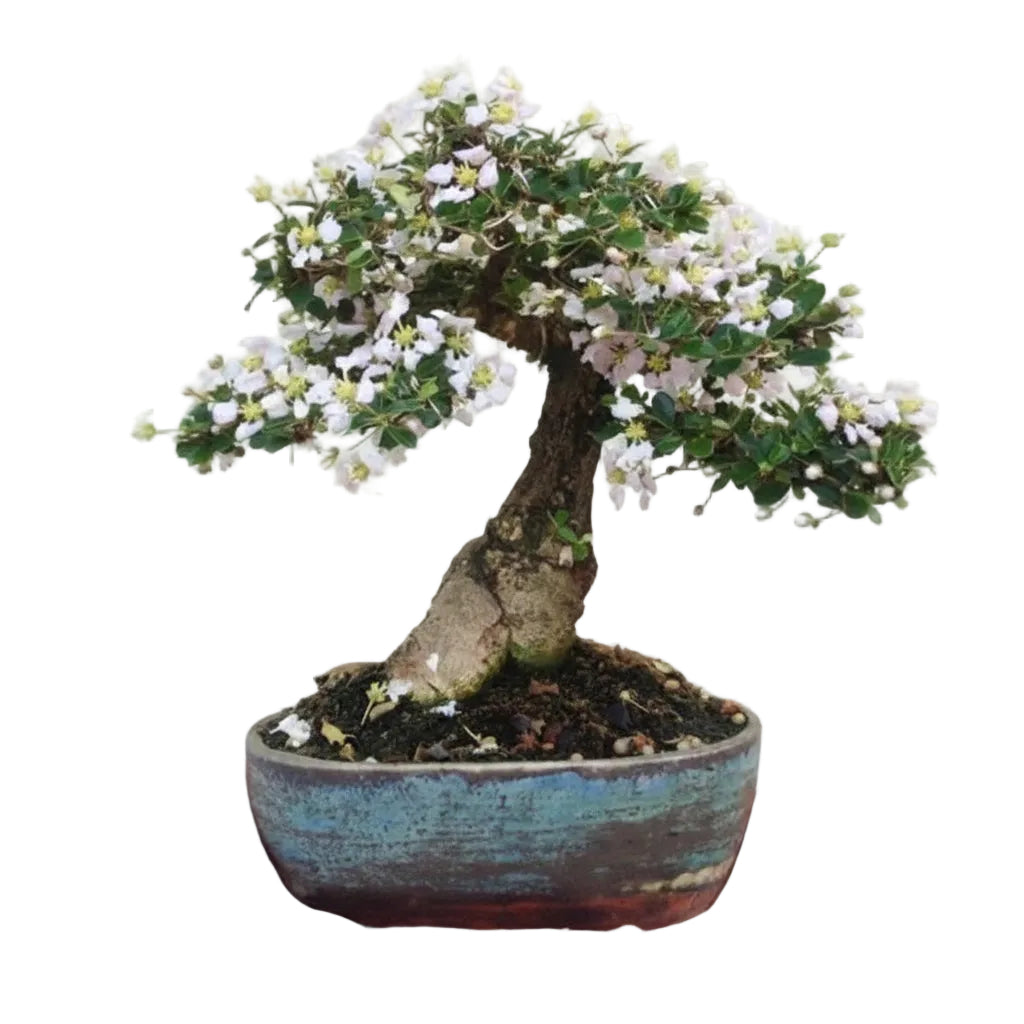
Malpighia Coccigera is also appreciated for its suitability for bonsai cultivation. The small scale of the plant allows attractive upright, oblique, and cascading forms to be developed, while group plantings can create an especially effective miniature landscape. The red fruits can also provide additional seasonal interest and may attract birds.
Environment
Sunlight: Provide good amounts of sunlight for healthy growth and to support flowering. A bright outdoor location with adequate direct or filtered sunlight is suitable.
Watering: Water regularly to maintain moderate moisture in the growing medium. Avoid allowing the bonsai to remain excessively wet, and ensure that excess water can drain freely from the container.
Soil: Use a loose, fertile, well-drained bonsai growing medium that provides good drainage while retaining sufficient moisture for the compact root system.
Fertilizer: Feed during active growth with a balanced bonsai fertilizer. Moderate, regular feeding supports healthy evergreen foliage and encourages flowering and fruit development.
Bonsai Care
Pruning and Shaping: Regular light pruning helps maintain the compact form of this Mame bonsai and encourages denser branching. Its small size makes simpler bonsai styles particularly suitable, including upright, oblique, and cascading forms.
Training: Mame bonsai have limited space for extensive structural training, so shaping should be carried out gradually while preserving the natural proportions of the miniature tree. Group planting can also be used to create an attractive miniature landscape.
Repotting: Repot when the roots become crowded or the growing medium begins to deteriorate. Use a well-draining bonsai mix and handle the compact root system carefully during repotting.
Landscape Uses
Ideal for tabletop bonsai displays, compact plant collections, balconies, patios, and terraces. Its miniature form also makes it well suited to Mame bonsai group plantings.


