

Daily
Water Requirement

Lavender
Flower Color

Non Fragrant
Fragrance

Hanging
Use

Ipomoea
Genus

Medium
Maintenance

Medium
Size
Outdoor
Use

Outdoor Sun
Sunlight Requirement

Yes
With Pots
Balcony,Hanging,Low Maintenance
Use
Railway Creeper
Family
Convolvulaceae
Native
Tropical America
Description
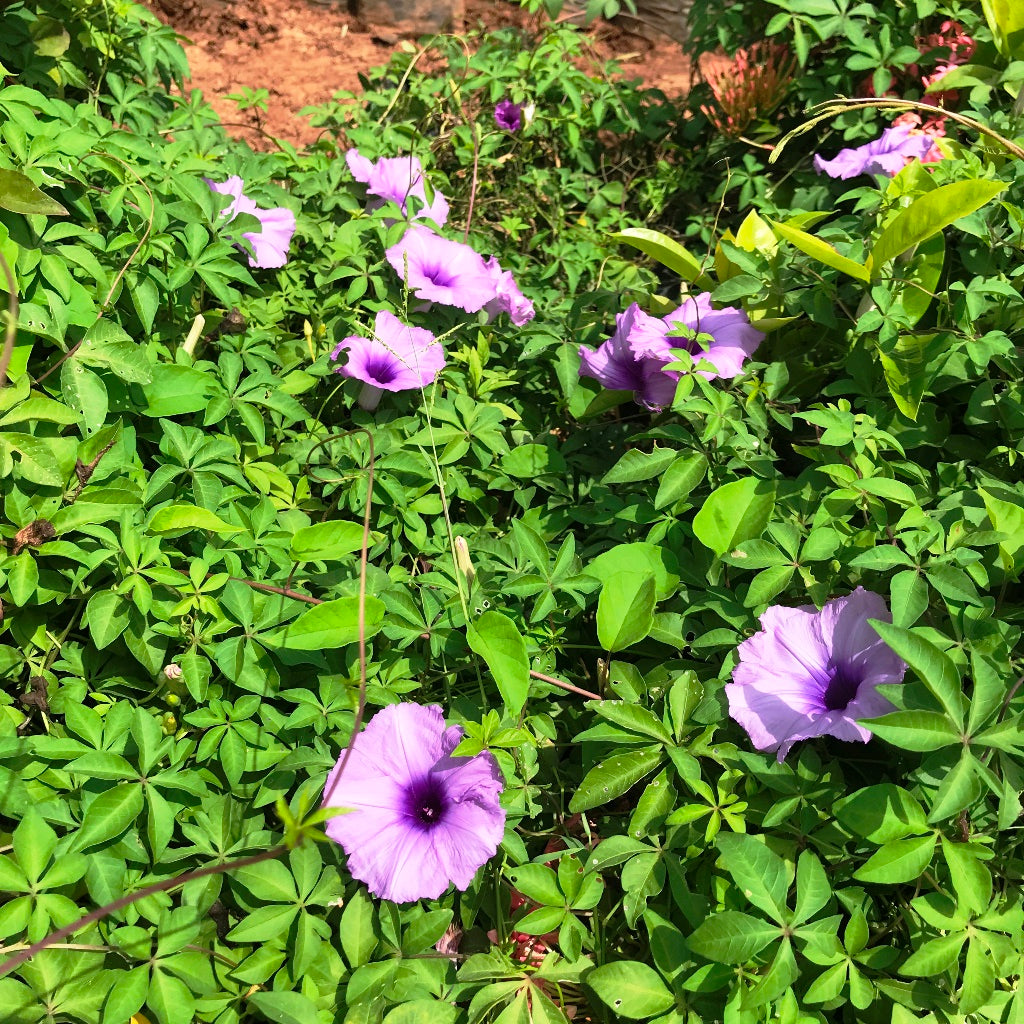
Ipomoea cairica is a vigorous, perennial climber, with a tuberous root that is brown outside and white inside. The stem grows up to about 5 m long, and is smooth and twining. The leaves are green, palmate, dissected into 5-7 leaflets, 30-100 mm in diameter. The leaves are alternate and crushed leaves are not aromatic..
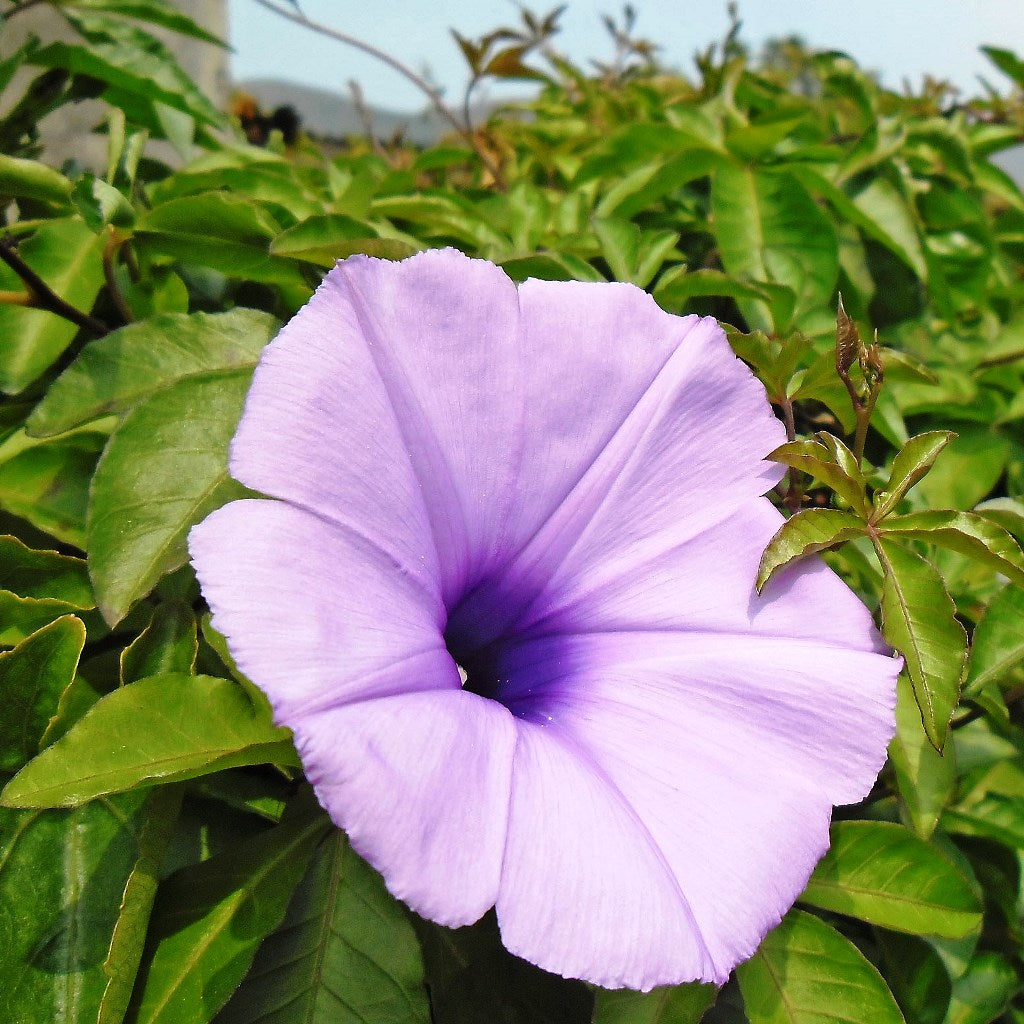
The flowers are trumpet-shaped, 30-60 mm long and 40-60 mm in diameter, purple to pinkish with a dark-centred eye and closes in mid-afternoon. It blooms throughout the year, and in a population one may find flowers and fruits occurring simultaneously.
The fruit is a capsule, 8-12 mm in diameter, roundish, green maturing to brown when they pop open, freeing small, brown, hairy seeds. It is a fast-growing plant and very aggressive.
Environment
As a houseplant, this plant will do best if you allow it to go dry in between waterings, but if left dry for too long, the leaves will wilt. Check the soil with your finger to ascertain how moist it is. If it feels damp to the touch, then wait a while before watering it.
Ipomoeas need bright sunlight to retain their spectacular colour. Keep it in moderately fertile and well drained soil. You can prune them in summers. Fertilize them once a month in the growing season but Don't fertilize it during winters.
They also make for beautiful climbers for which you can provide them some support.
Landscape Uses
Perfect for containers, as a filler or as ground cover.