

Daily
Water Requirement

Violet
Flower Color

Fragrant
Fragrance

Winter
Flowering Season

Low
Maintenance

No
With Pots

Small
Size

Outdoor Shade,Outdoor Sun
Sunlight Requirement
Society garlic
Family
Amaryllidaceae
Origin
South Africa
Description
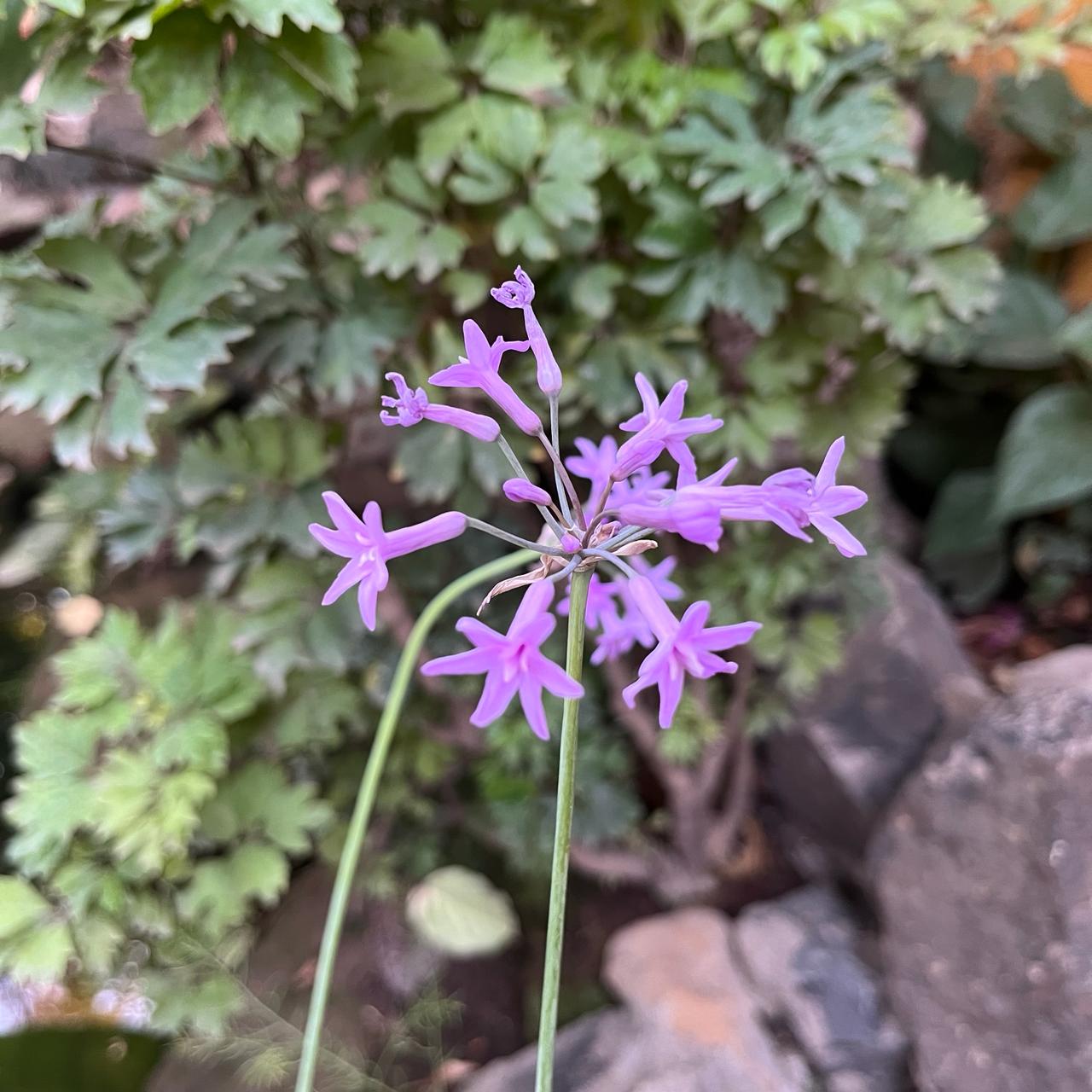
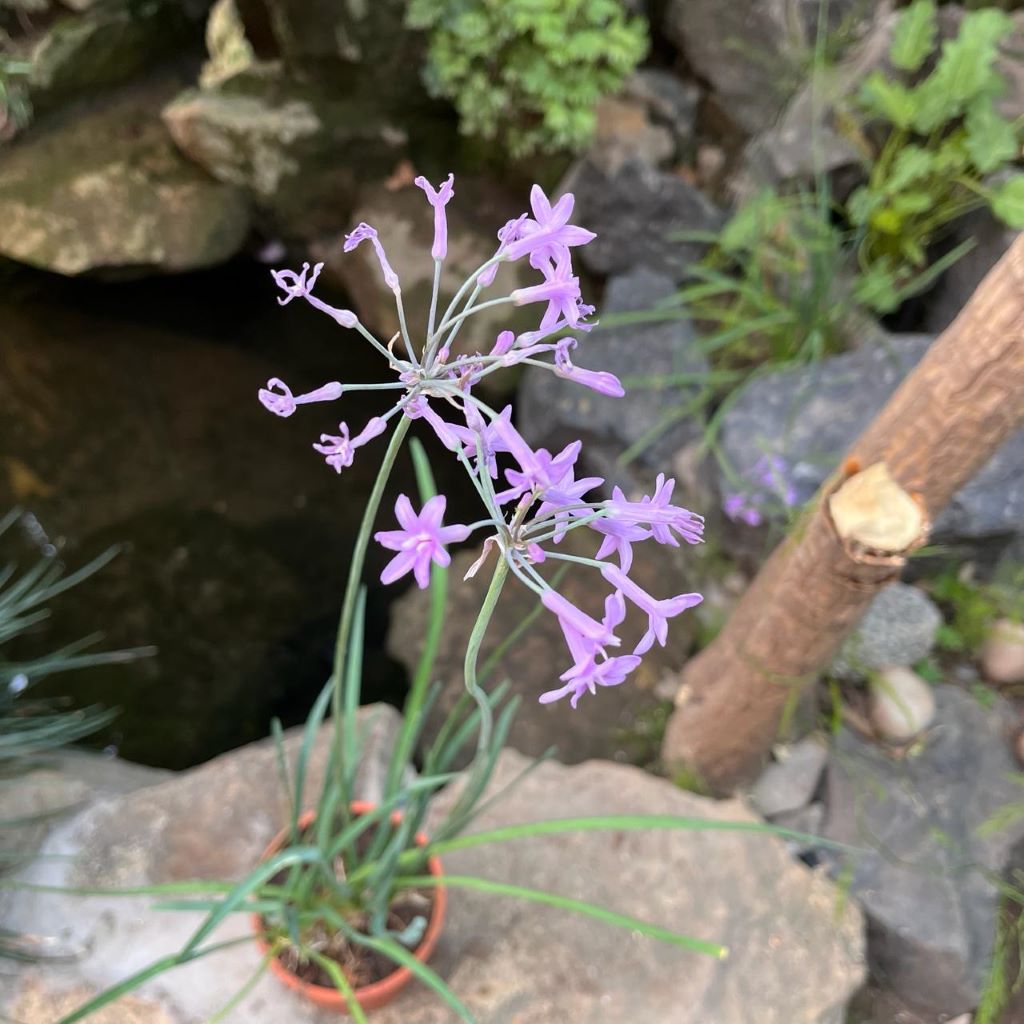
Sweet Garlic (Tulbaghia violacea) is a rapidly growing perennial herb reaching 30-50 cm in height and spreading 22-30 cm wide. Its long, narrow, slightly fleshy leaves emit a strong garlic scent when bruised and arise from thick, tuberous roots that form dense clumps. The plant produces clusters of up to 20 pinkish-mauve tubular flowers on tall stalks, which also carry a garlic aroma and bloom over an extended period. Its triangular fruit capsules release hard black seeds upon ripening. Traditionally, the Zulu people use the leaves and flowers as a spicy vegetable and seasoning, and the bulbs for medicinal purposes. Additionally, it serves as an effective snake repellent when planted near homes.
Tulbaghia violacea rhizomes produce fragrant lilac flowers along with garlic-scented foliage. They flower from April to June in plains and May to July in hilly areas. For best results, plant between February and April in plains or March and May in hills.
Environment
Sweet Garlic grow in moderately fertile, light, medium moisture, well-drained soils in full sun. Good heat and drought tolerance, but requires consistent moisture during its growing season. Plants will grow well in shade, but may not flower much.
The planting depth around 2 inches deep so that the shooting points are just above the soil. Plant whole rhizome into the soil leaving just the tips above.
Use a loam based compost with slow release feed granules added for long term feed. Ensure that you feed with during the growing season.
Landscape
This visually appealing plant is well-suited for herb gardens, with both its leaves and flowers edible in salads and various recipes. The crushed leaves have traditional uses in alleviating sinus headaches and deterring moles from gardens due to their strong aroma. When applied to the skin, the scent also acts as a natural repellent against fleas, ticks, and mosquitoes.