1.Proper soil preparation is crucial for planting bulbs successfully. Well-draining, loose soil enriched with compost or leaf mold. Ensure excellent drainage; if your soil is clay-heavy, mix in some coco peat.
2.Ensure the bulbs receive 4 to 6 hours of sunlight daily, adjusting the light exposure according to the specific variety—some prefer partial shade while others require full sun.
3.Plant bulbs at a depth two to three times their height (e.g., a 2 cm bulb goes 4–6 cm deep) with spacing depending on size, typically 5–15 cm apart.
4.Water lightly after planting, keep soil moist but not waterlogged during growth, and reduce watering after flowering to let foliage yellow and bulbs enter dormancy. 5.Apply a low-nitrogen, high-potassium fertilizer when shoots emerge and post-bloom.
6.Avoid cutting green leaves immediately after flowering to allow energy storage.
7.Prevent pests and diseases by avoiding overwatering and treating bulbs with neem oil or mild fungicide before planting.
8.Store bulbs off-season by cleaning, drying in shade, and keeping them in breathable containers at 10–20°C with moisture absorbers; avoid sealed plastic and humid conditions.


Daily
Water Requirement

Multicolor
Flower Color

Non Fragrant
Fragrance

Winter
Flowering Season

Medium
Maintenance

No
With Pots

Small
Size

Outdoor Shade,Outdoor Sun
Sunlight Requirement

Balcony,Low Maintenance
Use
Bugle Lily
Family
Iridaceae
Origin
South Africa
Description
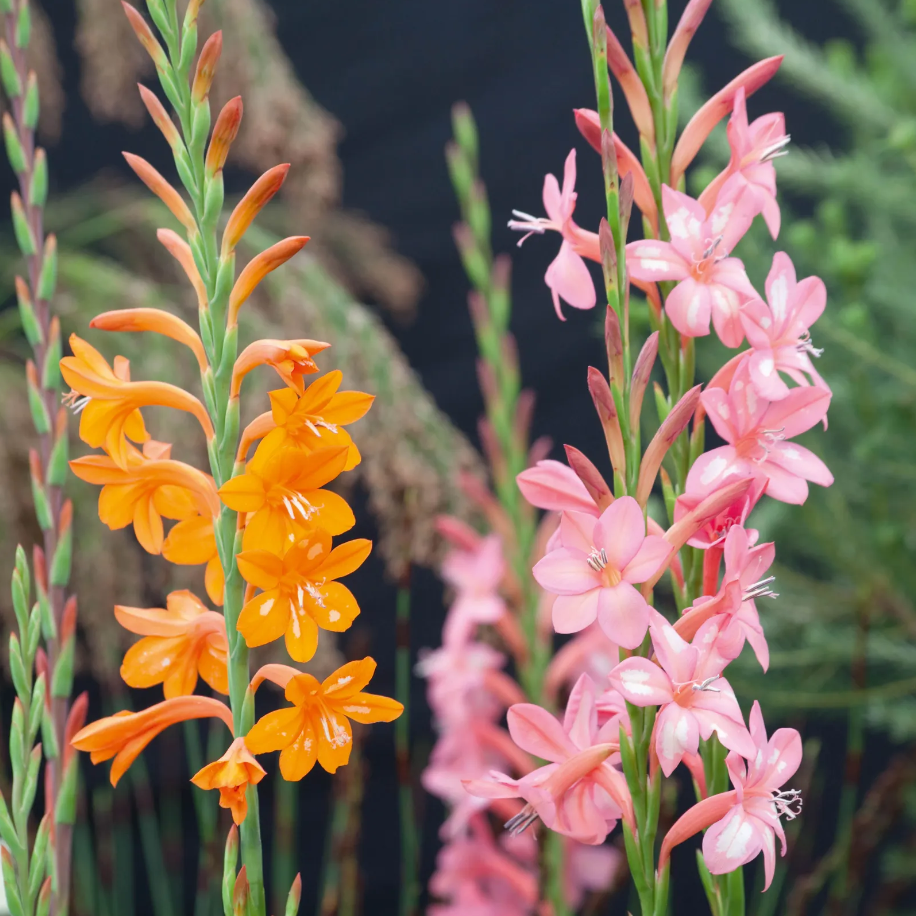
Watsonia also known as Bugle Lily, is a large perennial herb that grows from corms. They also bear more than a passing resemblance to their other South African cousin, gladiolus, with their tall, willowy flower stems and strap-like leaves. Their flowers are more delicate than most gladioli, however, opening up from tubular buds to graceful trumpet-like blooms – giving rise to the plant's common name, the bugle lily.
In Winter long strappy sword to reed like foliage is produced from the corm before the slender reddish flowering stems appear in Spring.
These lovely flowers rise on spikes from thick sword-like leaves about 18 inches (46 cm.) long. Flowers soar almost a foot (31 cm.) above the foliage and may be orange, red, pink, coral, white, peach, yellow and lilac hues.. Blooms are 3 inches (8 cm.) long and last several weeks, making them an attractive cut flower The flowers will last may weeks attracting beneficial insects and birds to them. Late in Summer to Autumn the plant will begin to die off and go into dormancy.
Watsonia’s brightly coloured flowers attract birds and pollinating insects into the garden.
Watsonia Mixed bulbs produce spikes of bright, colorful flowers in summer, making them lively selections for seasonal garden beds. They flower from February to April in plains and March to May in hilly regions. For optimal growth, plant during October and November in both plains and hills.
Environment
Watsonia like well-drained soil and full sun. They like fertile soil, preferably well drained but will put up with some water logging. When preparing your bed dig through a good amount of compost.
Prepare a bed in fall by adding a generous amount of compost and working it in to a depth of 6 inches (15 cm.). Bury corms 4 or 5 inches (10-13 cm.) deep, spaced 12 inches (31 cm.) apart. Cover them with the amended soil and tamp down lightly.
Water the plants periodically. It is better to provide a good weekly soaking than to water them lightly two or three times a week. The roots and stems will appear shortly after their first watering.
It needs occasional feeding during the growing season (autumn-winter-spring) with small doses of preferably organic fertilizer with a high concentration of potash.
Best left undisturbed and allowed to spread freely. Every few years it is important to divide clumps as their flowers begin to diminish each season. This can be done late Summer to Autumn. Make sure that when you cut up the corm that each piece has an eye and healthy roots. Replant by mixing through some compost.
Remove spent flowers at the end of the season however leave the leaves to continue to store energy for the next flowering season.
Fertiliser the plant during Spring with a bulb fertiliser.
Landscape Use
Watsonias are grand at the back of a border, where their 5- 6 foot tall flower stalks will be seen over other plants. Another way to grow them is behind a hedge, so they stand above it when in bloom, disappear when they die back.