
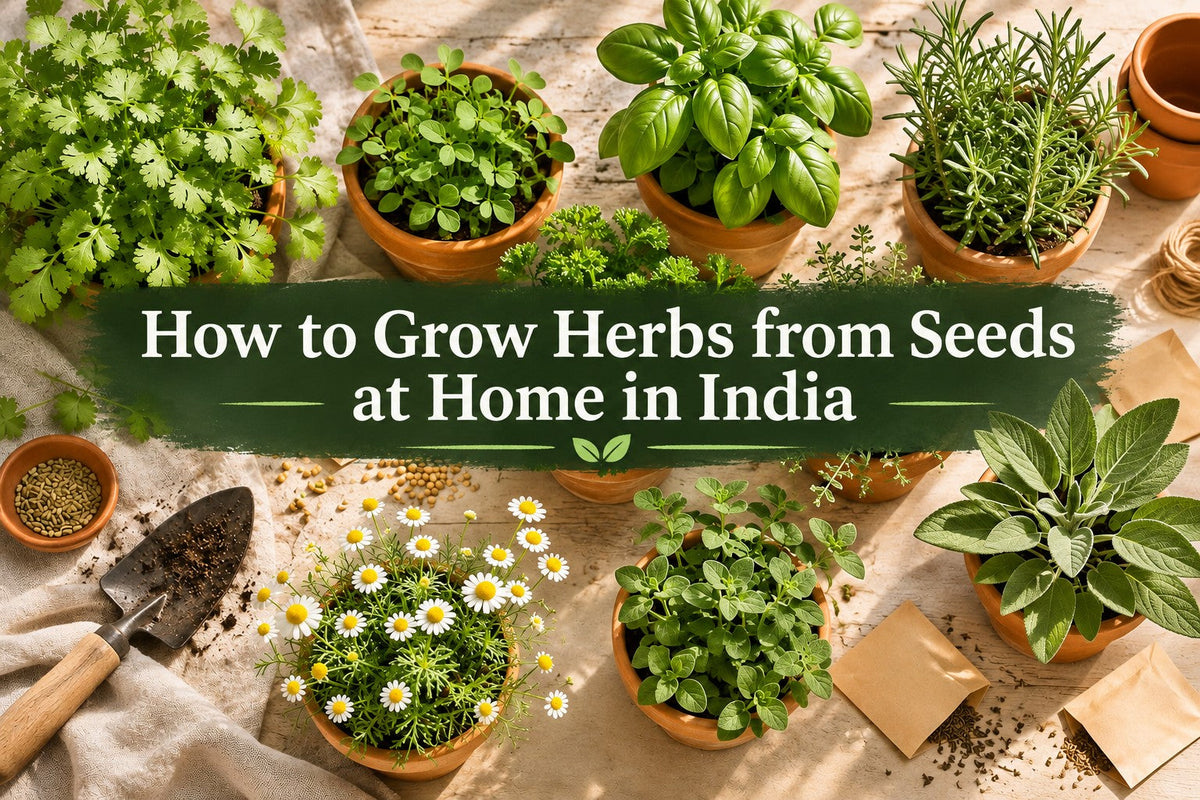
Growing herbs from seeds is a simple way to create a fresh, useful kitchen garden at home. Whether you have a sunny balcony, a terrace or a few pots near a window, you can grow familiar herbs such as coriander, fenugreek and basil, along with aromatic favourites like rosemary, thyme and oregano.
Different herbs have different growing habits and seasonal requirements. This guide explains which herbs are suitable for beginners, when to sow them in Indian conditions and how to care for them from seed to harvest.
Why Grow Herbs from Seeds at Home?
Growing herbs from seeds gives you the flexibility to choose varieties, sow small batches and enjoy fresh leaves as they grow. Many culinary herbs do well in containers, making them suitable for balconies, terraces and compact kitchen gardens. You can also sow a little at a time so that fresh leaves are available over a longer period.
Best Herbs to Grow from Seeds
Some herbs germinate quickly and are easy for beginners, while others need more patience. Here are nine herbs to consider for your home garden.
1. Coriander (Dhaniya)

A familiar kitchen essential, coriander is one of the easiest herbs to grow from seeds. Its fresh leaves are used in everyday Indian cooking, and the seeds are also harvested as a spice.
- Growing tip: Gently split the coriander seeds into two halves before sowing to help with germination. Sow directly in the final pot where possible.
- Season: Best suited to the cooler months in most Indian plains.
2. Fenugreek (Methi)

Fenugreek is a fast-growing leafy herb that is particularly rewarding for beginners. Its leaves can be harvested young for fresh methi dishes.
- Growing tip: Sow seeds directly in a wide container, keeping the soil lightly moist during germination.
- Season: Generally grows best during the cooler season in the plains.
3. Basil

Basil is a fragrant herb used in salads, pasta, sauces and other dishes. It grows well in warm conditions and can be grown in pots with good drainage.
- Growing tip: Sow seeds shallowly and provide warmth, light and consistent moisture. Pinch growing tips once the plant is established to encourage branching.
- Season: Sow during warm, frost-free periods; protect young plants from extreme heat and heavy rain.
4. Parsley

Parsley is valued for its fresh leaves, which are used in salads, soups and garnishes. It is slower to germinate than many common kitchen herbs, so patience is important.
- Growing tip: Keep the seed-starting medium evenly moist and avoid allowing it to dry out during germination.
- Season: Prefer cooler growing conditions, particularly in warmer parts of India.
5. Rosemary

Rosemary is a woody, aromatic herb commonly used to flavour roasted vegetables, breads and other dishes. Growing it from seed requires more patience than growing coriander or fenugreek.
- Growing tip: Use a well-draining growing medium, sow seeds shallowly and avoid overwatering. Germination can be slow and uneven.
- Season: Choose a mild period for sowing and protect young seedlings from harsh summer conditions.
6. Thyme

Thyme is a compact, aromatic herb used in soups, sauces and seasoning blends. Its small seeds need careful handling while sowing.
- Growing tip: Scatter seeds over the surface of a fine growing medium and press gently. Avoid covering them with a thick layer of soil.
- Season: Mild weather is preferable for establishing young plants.
7. Garden Sage

Garden sage is a perennial aromatic herb with textured leaves and a distinctive flavour. It is used in seasoning and can also be grown as an attractive addition to a herb garden.
- Growing tip: Provide good drainage and avoid keeping the soil continuously wet.
- Season: Sow during a mild period when seedlings can establish without exposure to extreme heat.
8. Oregano

Oregano is a popular culinary herb used in pizzas, pasta, sauces and Mediterranean dishes. It can be grown in containers and prefers a growing medium that drains freely.
- Growing tip: Sow seeds shallowly, provide adequate light and water carefully once the seedlings are established.
- Season: Mild weather is generally more suitable for starting plants in Indian plains.
9. German Chamomile

German chamomile is a delicate herb with small, daisy-like flowers. Its flowers are commonly used to prepare herbal infusions and add a decorative touch to the garden.
- Growing tip: Scatter the tiny seeds on the surface of the growing medium and keep them moist until germination.
- Season: Cooler months are generally preferable in the Indian plains.
What You Need to Start a Home Herb Garden
You do not need a large garden to grow herbs. A few suitable containers and a well-prepared growing medium are enough to get started.
- Containers: Choose pots or planters with drainage holes. Wider containers are useful for herbs harvested regularly, such as coriander and fenugreek.
- Growing medium: Use a light, well-draining medium that retains some moisture without becoming waterlogged.
- Sunlight: Most culinary herbs need good light, but the ideal exposure varies. Give young seedlings protection from harsh afternoon sun.
- Watering: Keep the medium evenly moist during germination. Once plants establish, adjust watering according to the herb and weather.
Explore Growing Media for your herb garden.
How to Sow Herb Seeds – Step by Step
- Prepare the container: Fill a clean pot or seed tray with a fine, well-draining growing medium.
- Check the seed size: Larger seeds can be covered lightly, while very small seeds such as thyme and chamomile should generally be surface-sown.
- Sow carefully: Follow the recommended sowing depth for each herb. Avoid burying tiny seeds too deeply.
- Water gently: Use a fine spray or gentle watering to moisten the medium without washing the seeds away.
- Provide suitable conditions: Keep the container in a bright place with the warmth and light appropriate for the herb being grown.
- Care for seedlings: Once seedlings emerge, provide adequate light and avoid overcrowding. Thin or transplant them when they are strong enough to handle.
For more guidance, read our Seed Germination Tips.
Best Time to Sow Herbs in India
India's growing conditions vary considerably between the plains, coastal areas and hill regions. The following is a practical, indicative guide for home gardeners in the plains. Local temperatures and the growing conditions of your area should guide the final sowing decision.
| Herb | Indicative sowing period in the plains |
|---|---|
| Coriander | October to November |
| Fenugreek | October to November |
| Basil | February to April; during suitable warm periods |
| Parsley | October to November |
| Rosemary | During mild weather; avoid extreme heat |
| Thyme | During mild weather; avoid extreme heat |
| Garden Sage | During mild weather; avoid extreme heat |
| Oregano | During mild weather; avoid extreme heat |
| German Chamomile | October to November |
These periods are indicative rather than fixed sowing recommendations for every Indian region. In hill areas and cooler climates, sowing periods may differ. For best results, consider local temperatures and the instructions supplied with the seeds.
Caring for Herb Seedlings and Harvesting
Young herb seedlings need attention while their roots and leaves are developing. Keep the growing medium moist but not waterlogged, and provide good light. Gradually acclimatise seedlings to stronger outdoor conditions if they were started in a protected location.
As plants grow, water according to their individual needs. Avoid excessive watering, particularly for Mediterranean herbs such as rosemary, thyme, sage and oregano, which prefer well-drained conditions.
Harvest leafy herbs regularly once the plants are established. Take only a portion of the foliage at a time, leaving enough leaves for continued growth. For herbs grown for their flowers or seeds, allow the plants to reach the appropriate stage before harvesting.
Common Mistakes to Avoid
- Sowing too deeply: Tiny seeds may struggle to emerge if covered with too much growing medium.
- Overwatering: Constantly wet soil can damage seeds and young roots.
- Ignoring seasonal conditions: Some herbs prefer cooler weather, while others grow better in warmth.
- Insufficient light: Seedlings grown in poor light may become weak and leggy.
- Harvesting too early or too heavily: Allow plants to establish before taking substantial harvests.
Frequently Asked Questions
Which herbs are easiest to grow from seeds in India?
Coriander and fenugreek are good choices for beginners, particularly in the cooler months. Basil is another suitable option when temperatures are favourable.
Can I grow herbs in pots on a balcony?
Yes. Many culinary herbs grow well in containers. Choose pots with drainage holes and place them where they receive suitable light for the herb being grown.
How long do herb seeds take to germinate?
Germination time varies by herb, seed quality, temperature and moisture. Coriander and fenugreek are generally quicker, while herbs such as rosemary and parsley can take longer and may germinate unevenly.
Can I grow different herbs in the same pot?
It is better to grow herbs with similar watering, sunlight and growth requirements together. For example, Mediterranean herbs that prefer well-drained conditions may not thrive alongside herbs that need consistently moist soil.
Start Your Herb Garden
Growing herbs from seeds is a rewarding way to bring fresh flavours and fragrance into your home. Begin with easy choices such as coriander, fenugreek and basil, and gradually try herbs that need more patience, such as rosemary, parsley and thyme.
Explore the Herb Seeds collection at myBageecha and start growing your own kitchen herbs.
You may also enjoy reading 10 Plants Perfect for Your Kitchen Garden.
```


